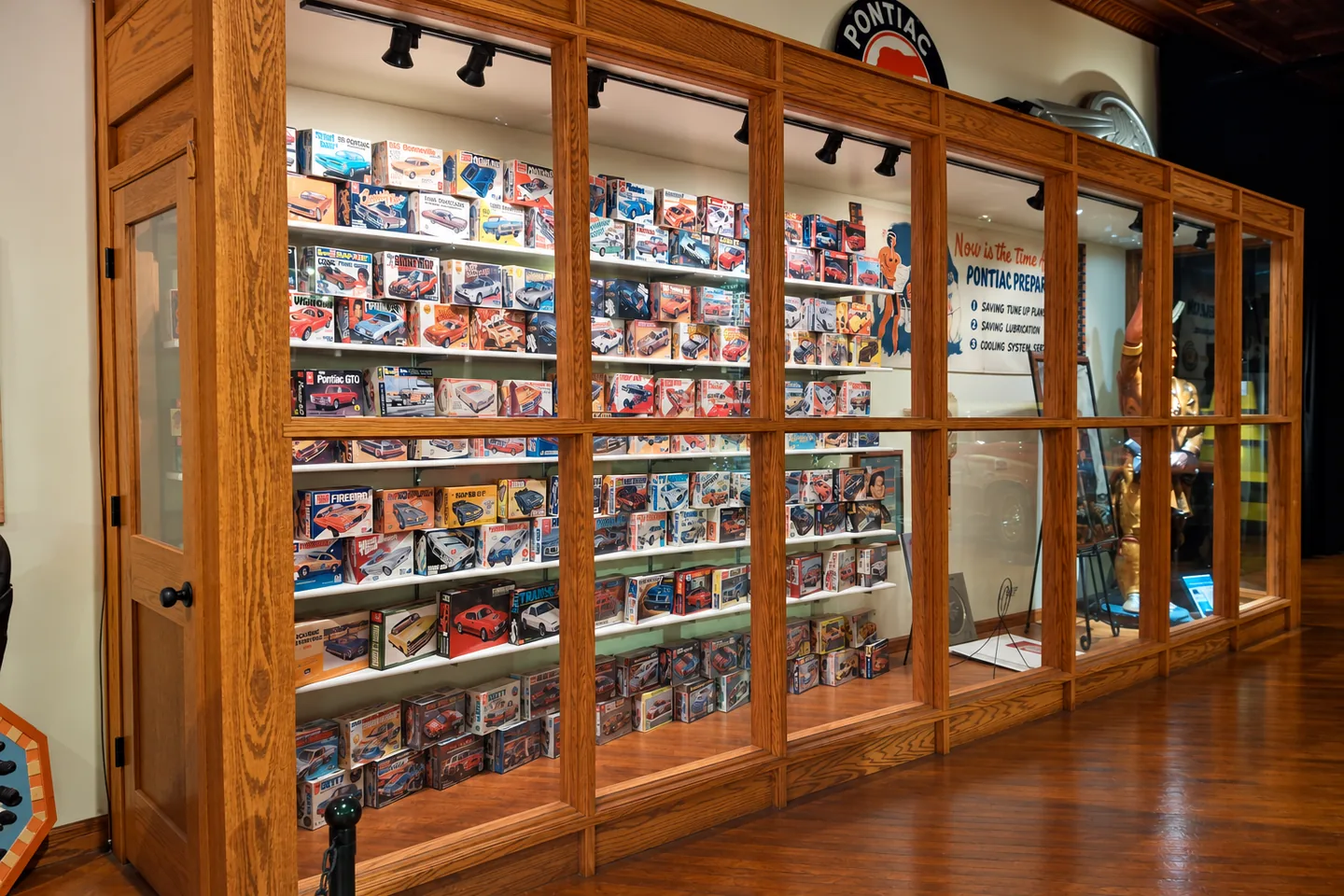
Cover image: Xnatedawgx · CC BY-SA 4.0 · AI-assisted composition and tonal edits; reference illustration, not a product test.

Choose a model-car display cabinet by checking the usable shelf space, the loading route, the complete load and the way you want to see the collection. A cabinet's outside dimensions or advertised car count cannot establish whether your particular models will fit.
Start with an inventory of the cars you want to display now. Identify the largest and most awkward arrangements, including attached bases and open parts. Those are often more useful to the first fit check than an average model.
Group by the space the models actually need
Scale is a useful inventory field, but cars of the same scale can have different shapes and bases. Measure the models in their intended display orientation. Include a wing, mirror or open door where it extends beyond the main body.
Group models by their measured envelope and the view you want to show. A shelf of side profiles uses space differently from a shelf of angled front views. Decide whether each car will remain on its supplied base and record that choice.
Use the measurement guide to keep this information consistent. Do not carry a fit decision from one model into another simply because their scale labels match.
Ask for clear usable shelf dimensions
Confirm the usable width and depth of each relevant shelf. Check whether supports, door hardware or the frame reduce the space. For height, measure the clear gap above the actual shelf surface and below any obstruction.
Find out which shelves can move and which positions are available. Adjustable does not mean every height is possible. Also ask whether the load rating changes with the shelf arrangement or any accessories you plan to use.
Keep the supplier's drawing or specification with your inventory. A dimension taken from a product photograph should remain an estimate unless a dependable scale and measurement method are established.
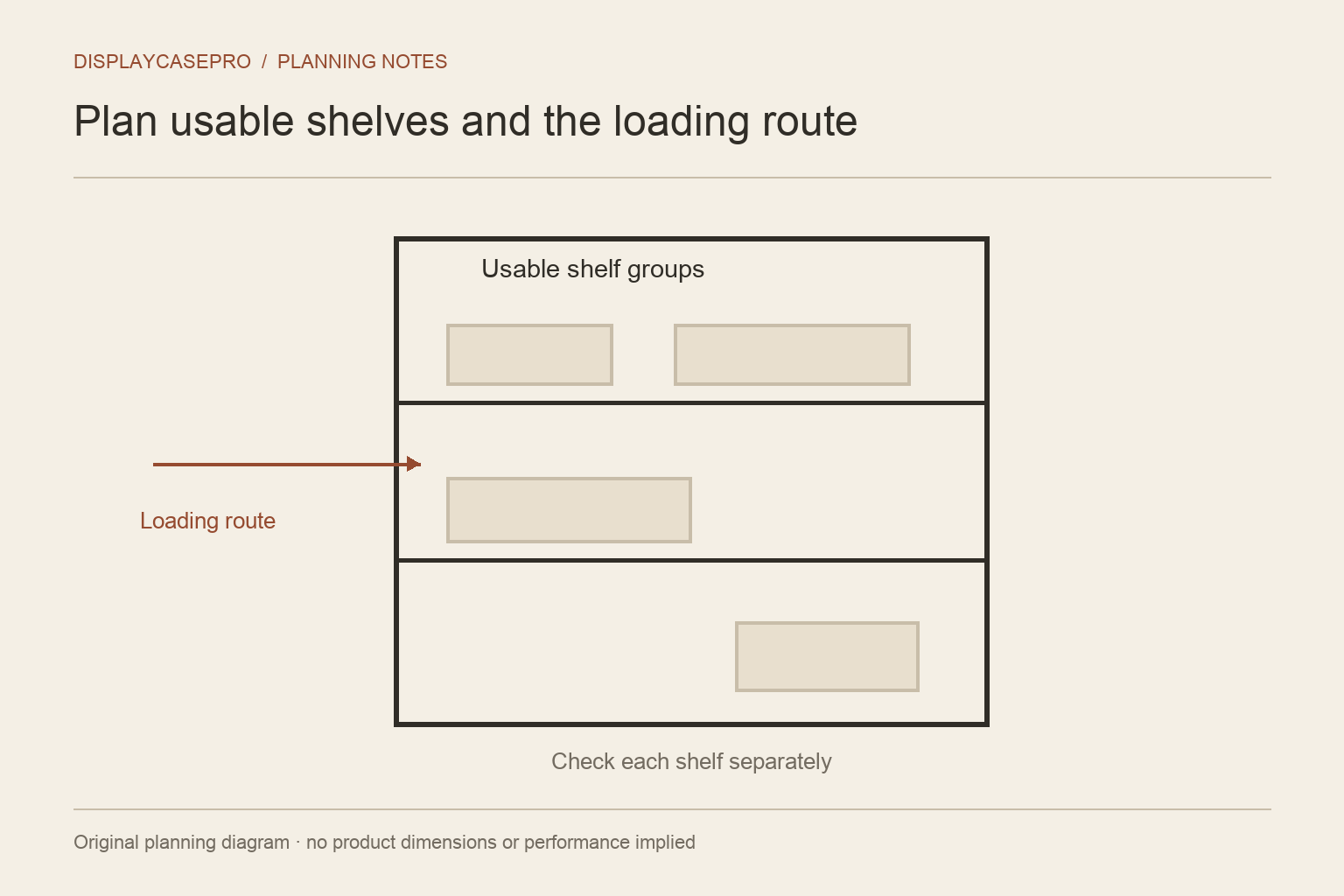
Plan an arrangement before counting capacity
Make a paper plan of a shelf's usable area. Place outlines for the cars and their bases in the proposed orientation. Include the visual gaps you want and the access you need to pick up one model without touching another.
Do not estimate capacity by dividing total cabinet volume by a car's volume. Empty space above one model cannot always be used by another, and the opening or shelf layout may be the limiting factor.
If risers are part of the plan, check their footprint, load information and what they obscure. Treat a riser as another product requiring a fit and support check, rather than free extra capacity.
Test the loading route on paper
Compare the door opening with the complete model or base that must pass through it. Note hinges, a centre divider and any part that narrows the route. Check how far the door must open and whether nearby furniture allows that movement.
Then consider reach. Which car would need to move first to reach the back row? Where would you put it while working? A capacity plan that makes routine handling awkward may be less useful than one holding fewer cars with better access.
For a small group whose presentation is mainly wall-based, compare the model-car frame checklist before committing to a full cabinet.
Verify loads and installation
Check the documented load limits for the exact cabinet and shelves, including any conditions in the instructions. Add up the weights of the models, bases, risers and other items on each shelf, then compare the complete load with that shelf's documented limit and conditions. Do not infer a safe load from shelf thickness or appearance.
Follow the furniture maker's installation and anchoring instructions. The Consumer Product Safety Commission's Anchor It guidance addresses furniture tip-over prevention. It does not substitute for identifying the correct fixings and installation method for your cabinet and wall.
Plan the view and the lighting together
Look at the proposed cabinet position from where you will normally stand or sit. Note reflections from windows and room lights. Consider whether labels, dark interiors or the front edge of a shelf will obscure the details you want to see.
If you plan to add lighting, check the cabinet and lighting manufacturers' instructions before buying a separate system. Our cabinet lighting planner covers sightlines, cable routes and the information needed for a lighting shortlist.
Keep growth practical
Reserve a plan for future additions instead of treating every empty shelf area as a problem to fill. You might change shelf groups, rotate part of the collection or use a separate display for an unusually large model.
Save the current inventory, shelf layout and unresolved product questions. When the collection changes, review those records. The useful result is a cabinet that supports a workable display and handling routine, rather than a maximum car count that only works in a listing photograph.
Make a cabinet comparison sheet
Compare shortlisted cabinets against one planned collection group at a time. Record the original specification and its source rather than filling missing shelf dimensions from the overall furniture size.
| Field | Question |
|---|---|
| Usable shelf area | What width and depth remain after supports and other obstructions? |
| Vertical arrangement | Which shelf positions are permitted and what clear heights result? |
| Loading route | Can the complete object and base enter through the intended opening? |
| Specified limits | What do the actual installation and shelf-load instructions require? |
| Closure and care | How do doors close, and which components need maintenance? |
For a cabinet already in use, the cabinet dust inspection guide provides a separate gap-and-access inspection record. Keep that maintenance task distinct from choosing furniture before purchase.
Comments
Share a display tip or ask a question.