A trumpet display case should identify how the instrument is mounted, how the mount joins the case and how the finished frame is placed. Start with those three connections. A quoted frame size, an open horizontal holder and a box of trumpet mouthpieces describe different assemblies; a transport-case exterior cannot supply their clear receiving dimensions.
Give the frame maker a complete instrument record
Record the instrument’s type, maker and model as documented. Include a photograph of its complete intended display state and identify any retained mouthpiece or accessory. A familiar trumpet outline is not a specification for every tube arrangement, bell, valve assembly or finish.
Choose the visible face before discussing the frame border. Decide which engraving, complete silhouette or documented history should be apparent from the room. Keep the label beside that view, with uncertain attribution explicitly marked rather than completed from appearance.
| Record | What to supply | What the maker must identify |
|---|---|---|
| Whole instrument | Exact type, retained parts and complete outline. | The intended receiver and supported display state. |
| Important view | The face or marking you want unobstructed. | Where hanger, border and front fall in that view. |
| Enclosing frame | Selected style and proposed orientation. | Labelled cavity above the actual mounted surface. |
| Later removal | Playing or inspection routine. | Release sequence, clear front opening and waiting position. |
Use existing images and a labelled outline to discuss the arrangement before commissioning a frame. A photograph can show the maker the actual object without being treated as a dimensional drawing. Keep the instrument’s own handling instructions with that brief.
A hanger attached to acrylic is one connection
My Framing Store’s trumpet frame describes an acrylic case, black matting base, frame border, a hanger and mounting strips for attaching that mount to the acrylic case. Ask how those supplied parts receive your exact instrument before treating the word hardware as a complete installation answer.
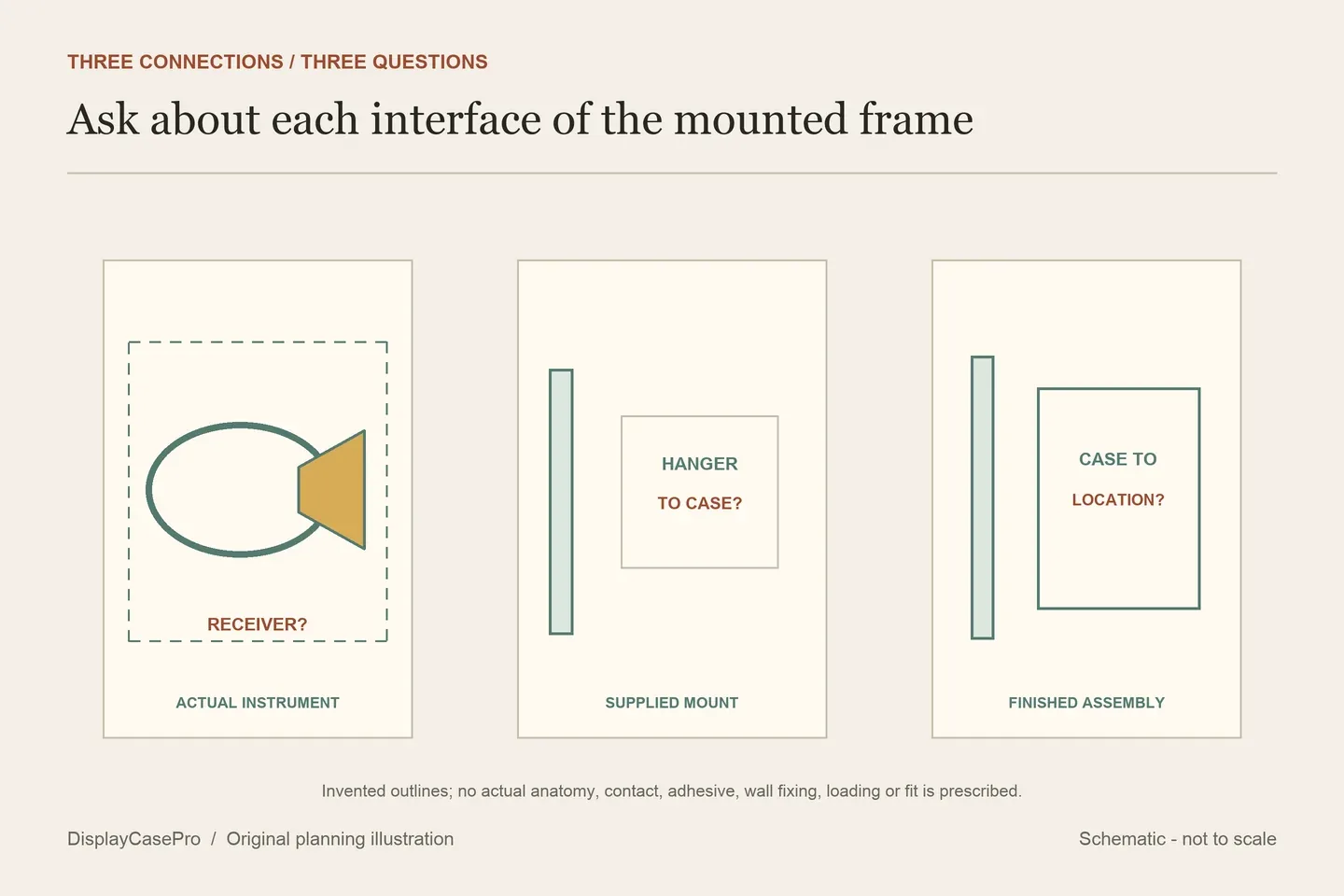
Separate the three connections in the order enquiry: instrument to hanger, hanger to case, and finished case to the wall or other intended location. Confirm the selected product’s instructions for each. A strip described for the acrylic surface is not automatically the specified wall fixing.
The same page distinguishes a simple one-inch black-base style from a silver-inner-frame design. That one-inch description should remain a style detail until the maker defines it. It does not establish an inch of clear space around the mounted instrument.
The published dimensions describe different products
These pages were read on 18 October 2026. DisplayCasePro has not mounted instruments, tested contacts or verified carrying and protection claims.
| Product | Published information | Keep unresolved |
|---|---|---|
| My Framing Store frame | W8 × L19 × H9 in. | Inside/outside and the measuring endpoints are unlabelled. |
| My Trumpet Stand | Custom horizontal resin stands; standard size unspecified. | Exact receiver, contacts and complete instrument-and-stand dimensions. |
| Bach mouthpiece category | 24-trumpet format; separate 22-position mixed format and insert. | Each mouthpiece’s selected receiving position, not whole-instrument capacity. |
| SKB 1SKB-330 | External L22 × W11.25 × H6.75 in. | Transport exterior, without a clear mounted-display cavity. |
Keep My Framing Store’s length, width and height labels as published. Ask for a drawing showing the measuring endpoints, finished mounting plane and closed acrylic front. Subtracting a guessed border from the 19-inch length would not establish the supported instrument space.
My Trumpet Stand offers custom horizontal displays and describes resin construction. Its standard-trumpet wording has no numerical receiver specification in the inspected description. Request an answer for your actual instrument, including the complete supported projection if another cover will surround the stand.
SKB’s rectangular 1SKB-330 is a transport case with a plush EPS interior and separate straight-mute storage. Its labelled external dimensions differ from the larger carton dimensions on the same specification panel. Neither is a transparent frame’s usable space or a reason to adopt a particular display contact.
Keep a mouthpiece row separate from the instrument mount
Mouthpiece Express’s category shows three cards: a case for twenty-four trumpet mouthpieces, a replacement-style insert, and a twenty-two-position case described for sixteen trumpet plus six trombone or large-rim trumpet mouthpieces. These are not three frames for complete trumpets.
Give each mouthpiece an identifier and record the marking that establishes its association, if known. Keep an original box or another retained accessory linked to that record. One vacant position or a similar rim does not confirm the intended receiving shape.
For a frame containing both an instrument and separate mouthpieces, submit a position plan for the whole group. The small pieces need their own receivers and release routes; their positions are additional to the instrument mount. Obtain the selected insert’s details instead of dividing the case’s overall width by its nominal count.
Check what happens when the instrument leaves the frame
Ask how the front or surround opens and how the instrument is released from its designated receiver. Keep both answers in the order record. An open door still needs to leave the intended approach to the instrument and any separate mouthpiece row.
Paige’s Music’s trumpet-case category contains four transport-case or bag cards. Those products address a packed instrument, rather than a continuously visible mounted display. A playing instrument’s return to its proper carrying arrangement remains a separate routine under its own instructions.
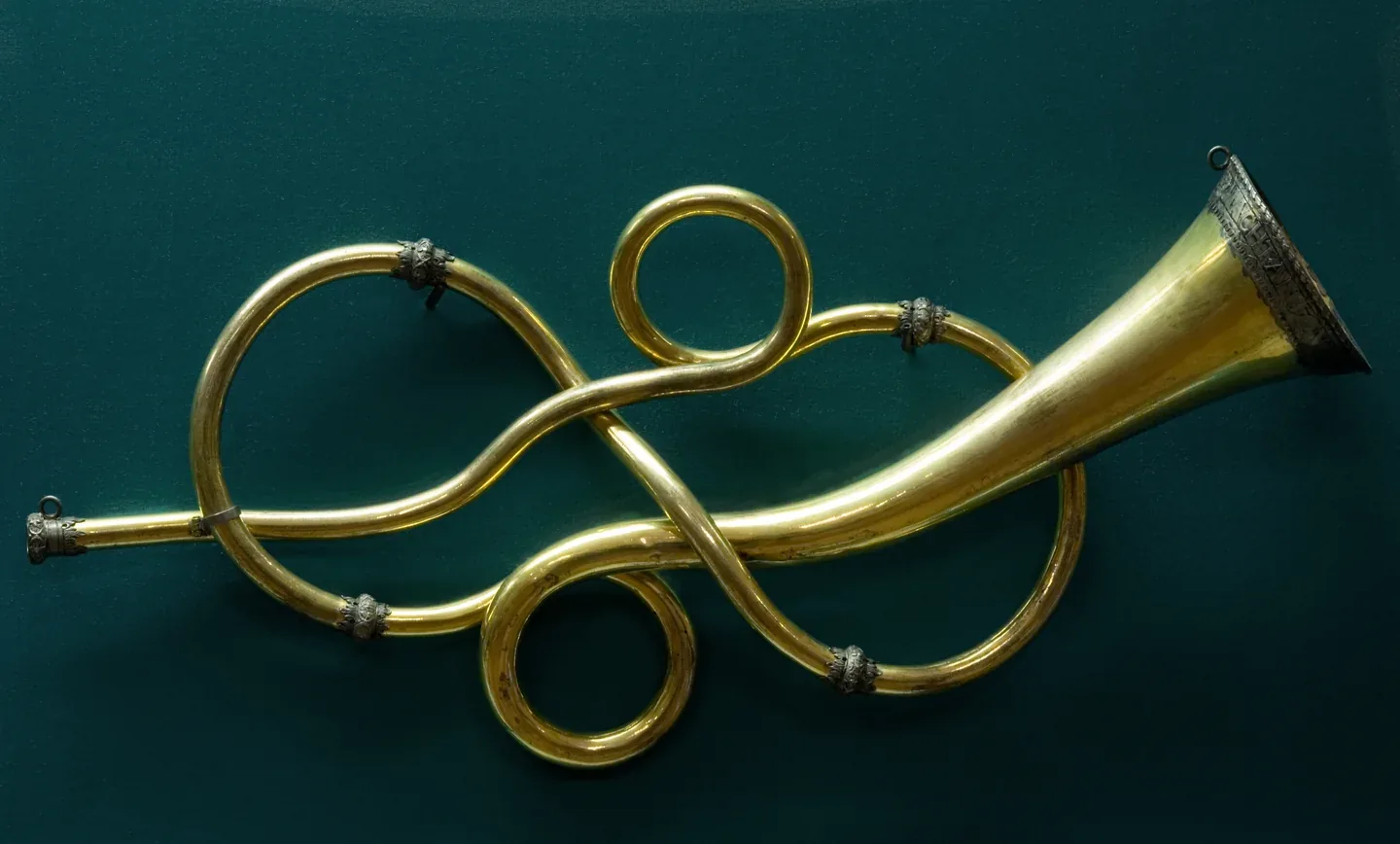
The cover photograph shows a looped-tubing museum trumpet, with its flared bell and decorative details retained. Photo: © Jorge Royan / www.royan.com.ar / CC BY-SA 3.0. Whole composition retained, proportionally resized and compressed to WebP; derivatives retain that license. It is context, without demonstrating a compared frame or approved support.

Use the mounted trumpet and mouthpiece worksheet with the usable depth guide and collection wall planner for the finished assembly’s receiving space and location.
Common questions
Does included hardware settle the wall installation?
Identify each connection. The cited hanger-to-acrylic mounting description does not by itself specify every wall attachment.
Can a transport exterior replace a display-frame interior?
Keep their boundaries and instrument states separate. Ask for the mounted display’s own labelled cavity and opening.
Comments
Share a display tip or ask a question.