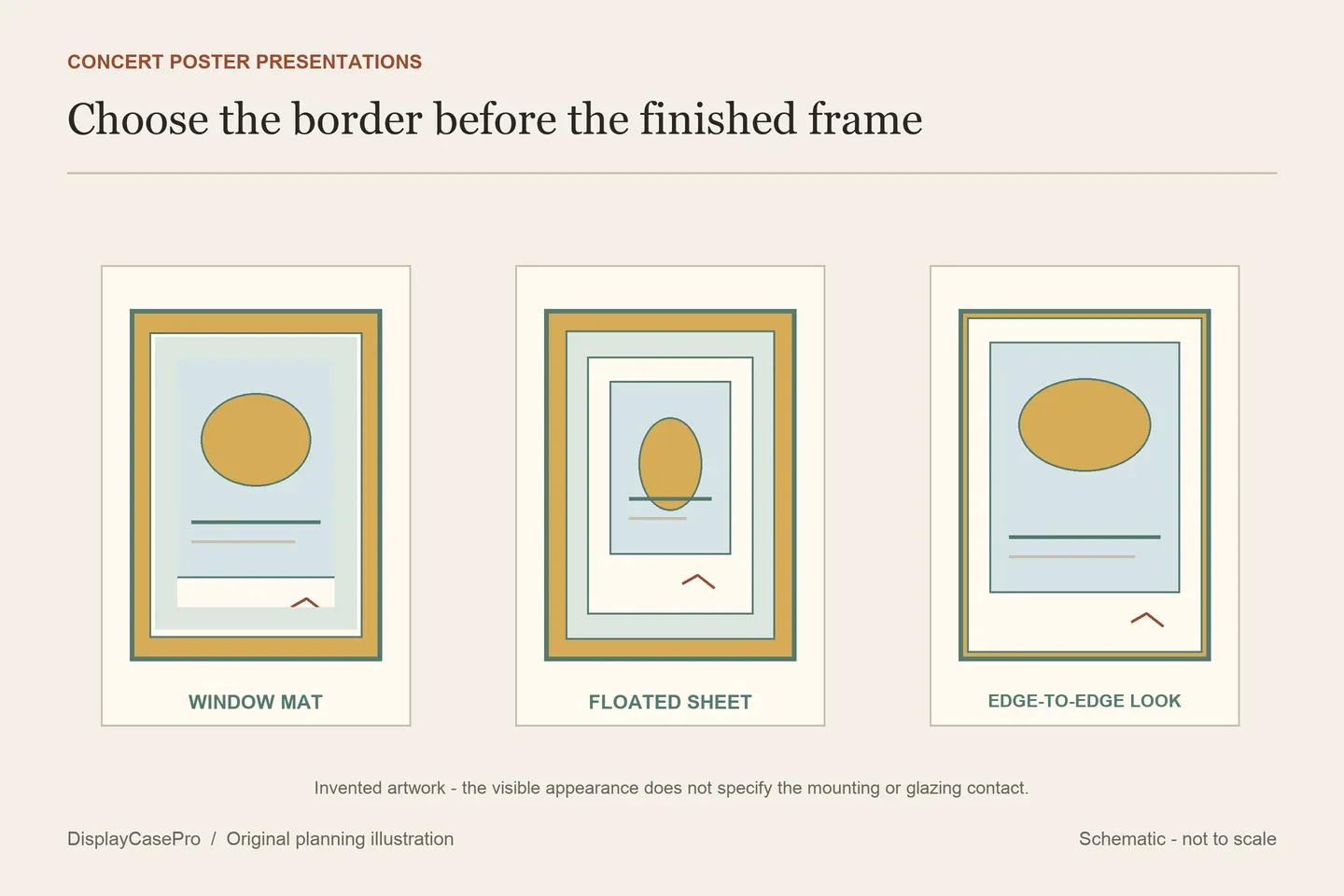
Choose a concert poster frame around the complete sheet, not just the printed image. Decide which borders, signatures and edition marks must remain visible, then choose a window mat, a floated presentation or an edge-to-edge look. The same poster size can produce very different glazing and finished-frame dimensions.
Measure the sheet before choosing a nominal poster size
Record the full paper width and height, the printed image boundary and any unprinted margin. Note signatures, edition numbers, an embossed mark or a deliberately irregular edge that belongs in the view. A frame that receives the paper can still hide important information beneath its lip or mat.
Use the actual print. A tour poster, a venue advertisement, a handbill and a later commemorative reproduction can have different dimensions and borders. Do not trim an original to match a common frame label or describe a reproduction as the item acquired at an event.
The Frame Destination concert-poster guide discusses several poster and handbill formats, with a range of example sizes. That is a reason to measure your sheet, rather than a size standard for every concert poster. Its collecting history and auction examples are not needed to establish your poster's dimensions or identity.
Record condition before asking for a frame: rolled, folded, rippled, torn or carrying a vulnerable surface. Describe those observations without trying to flatten, heat or repair the sheet as part of measuring it. The framing brief should identify a condition question rather than conceal it under a preferred design.
A window mat and a floated sheet show different edges
| View | What the design does | Question for the framer |
|---|---|---|
| Window mat | Places a visible border around an opening over the sheet. | Will the actual opening reveal the whole intended image, signature and edition marks while the sheet remains supported? |
| Floated sheet | Shows the paper's outer edges against a surrounding background. | How will the complete sheet be mounted and separated from glazing, including any ripples or irregular edges? |
| Edge-to-edge look | Presents the poster with little or no visible mat border. | What part of the sheet will the frame lip cover, and how will support and glazing separation be provided? |
“Full bleed” describes an appearance, not permission to cut the poster or press it directly against a clear panel. Ask what the proposed opening will actually conceal. A narrow unprinted border can be intentional, particularly when it carries an artist's mark.
A floated presentation also needs a distinct mounting plan. Showing every edge means the sheet cannot simply depend on being hidden behind a window mat. Agree how it will be supported and later removed before you choose the final background color.
Two 18 × 24 in posters can need different framing briefs
Flax Art & Frame's concert examples describe two actual projects with 18 × 24 in posters and different presentations. They illustrate dimension definitions and design choices, not a universal frame specification or work performed by DisplayCasePro.
| Project | What the framer states | What those numbers do not tell you |
|---|---|---|
| Grateful Dead poster | 18 × 24 in poster floated on a mat background; glass size 22 × 28 in. | The glass size is not the finished outer frame or the visible paper window. It does not specify equal margins on every side. |
| My Morning Jacket poster | 18 × 24 in poster framed edge to edge with Optium Museum Acrylic and no mat. | No separate acrylic cut size or finished outer dimensions are supplied in the description. Do not infer either from the poster size. |
The first example makes the paper and glazing measurements visibly different. The second shows that the absence of a visible mat is a separate choice. Neither project establishes the correct materials or contact arrangement for every concert print.
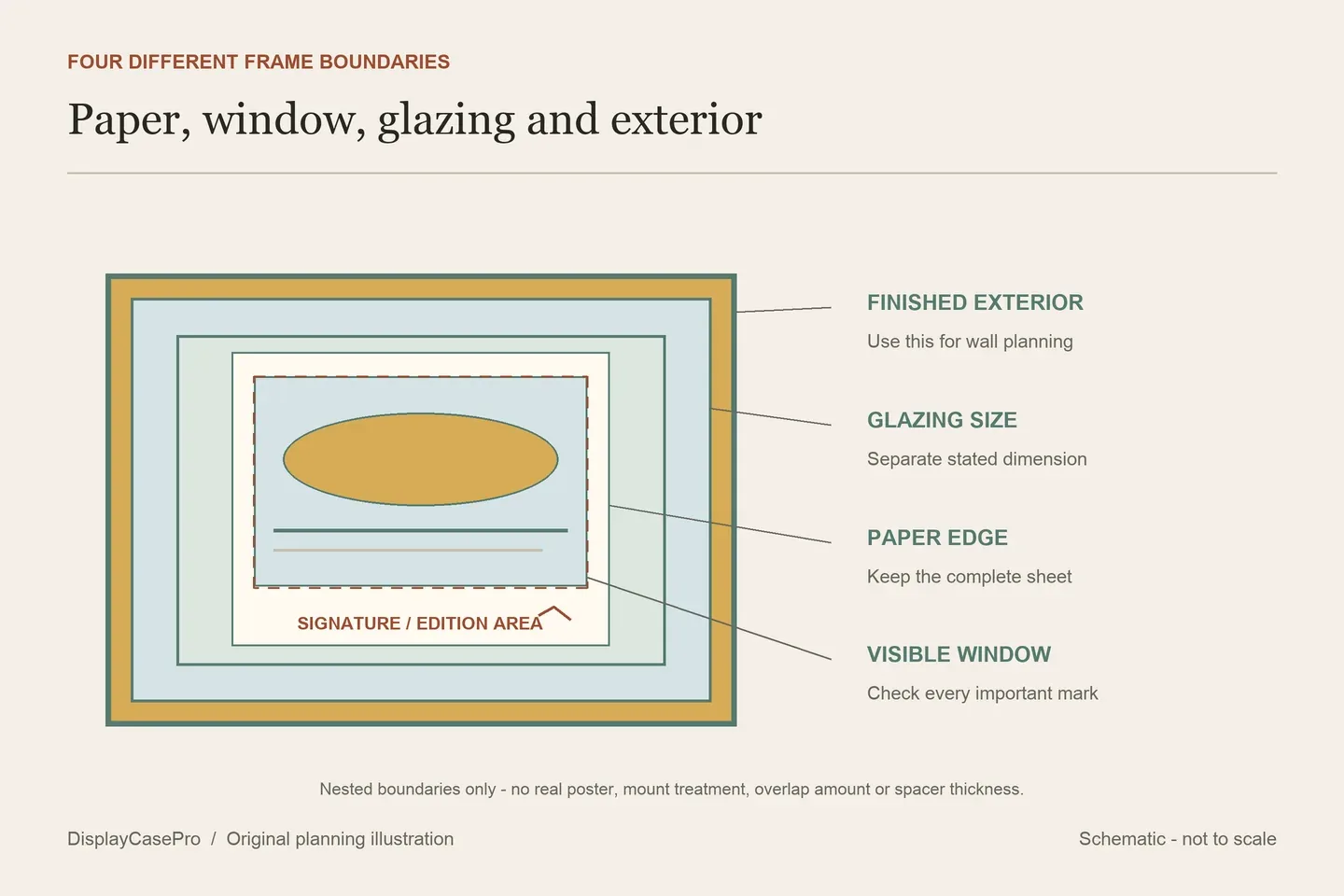
Use a dimensioned preview for your own sheet: full paper outline, image boundary, important marks, proposed window or exposed edge, glazing size and finished exterior. The collection wall guide can then arrange the finished exterior among other frames. An 18 × 24 in sheet should not be used as the wall footprint of every completed design.
Keep the paper surface separate from the style decision
The Canadian Conservation Institute's framing note discusses adequate frame depth for the mounting, backing and glazing assembly, and spacers where there is no window mat. It cautions that unstable surfaces or distorted paper can still touch glazing even with a spacer. Use those distinctions when asking for a plan suited to the actual sheet.
A retailer's example of acrylic placed directly against a flat print does not establish that the same contact is appropriate for another ink, foil, raised surface or damaged sheet. Likewise, a general promise of museum-quality materials is not a complete description of the finished assembly.
Ask for the intended mounting method, contact materials, glazing separation and removal method. The Frame Destination guide discusses permanent dry mounting for replaceable decorations and different treatment for collected originals. Do not treat that as an instruction to permanently attach your original, or improvise a hinge method from a short product description.
A glazing upgrade is a separate specification. Keep its exact product name and documented properties with the frame record, but do not turn a UV label into an unlimited safe display period. Choose the location and lighting with the paper and print process in mind.
Choose who will carry out the mounting
Level Frames describes At Home framing, where a custom frame and instructions are sent to you, and In-Studio framing, where you send the poster for mounting. Those routes change who handles the original and who needs to assess the mounting task. Its stated timing or an easy-assembly description is not evidence that every poster's condition suits self-mounting.
Simply Framed similarly distinguishes Mail-in and Frame Only service. Its recommendation for a minimal no-mat look remains a design suggestion. Confirm the actual paper support and clear separation of the selected arrangement before using that appearance as your brief.
Frame It Easy's poster category offers metal and wood styles and custom sizing, including unusual poster sizes. A style name or moulding description does not identify your finished opening or confirm that the complete mounting stack fits. Obtain the specifications for your selected configuration.
Before ordering, settle these fields in the blank concert-poster framing worksheet: original or reproduction, full sheet, visible marks, presentation, mounting responsibility, accepted assembly and final exterior. The usable-depth guide covers the separate depth question when additional objects or a deeper assembly are involved.
Common questions
Is an 18 × 24 in frame label the size I will see on the wall?
Confirm what the label measures. Paper, glazing, visible opening and finished exterior can all differ, as the attributed projects demonstrate.
Do I need a visible mat around a concert poster?
It depends on the desired view and the actual mounting plan. A no-mat appearance still needs appropriate support and a resolved relationship between paper and glazing.
Should I hide the white border to make the image fill the frame?
First check what that border contains and whether it is part of the print's intended presentation. Keep signatures and edition marks in the brief; choose the opening around the complete item instead of altering it to suit a frame.
Comments
Share a display tip or ask a question.