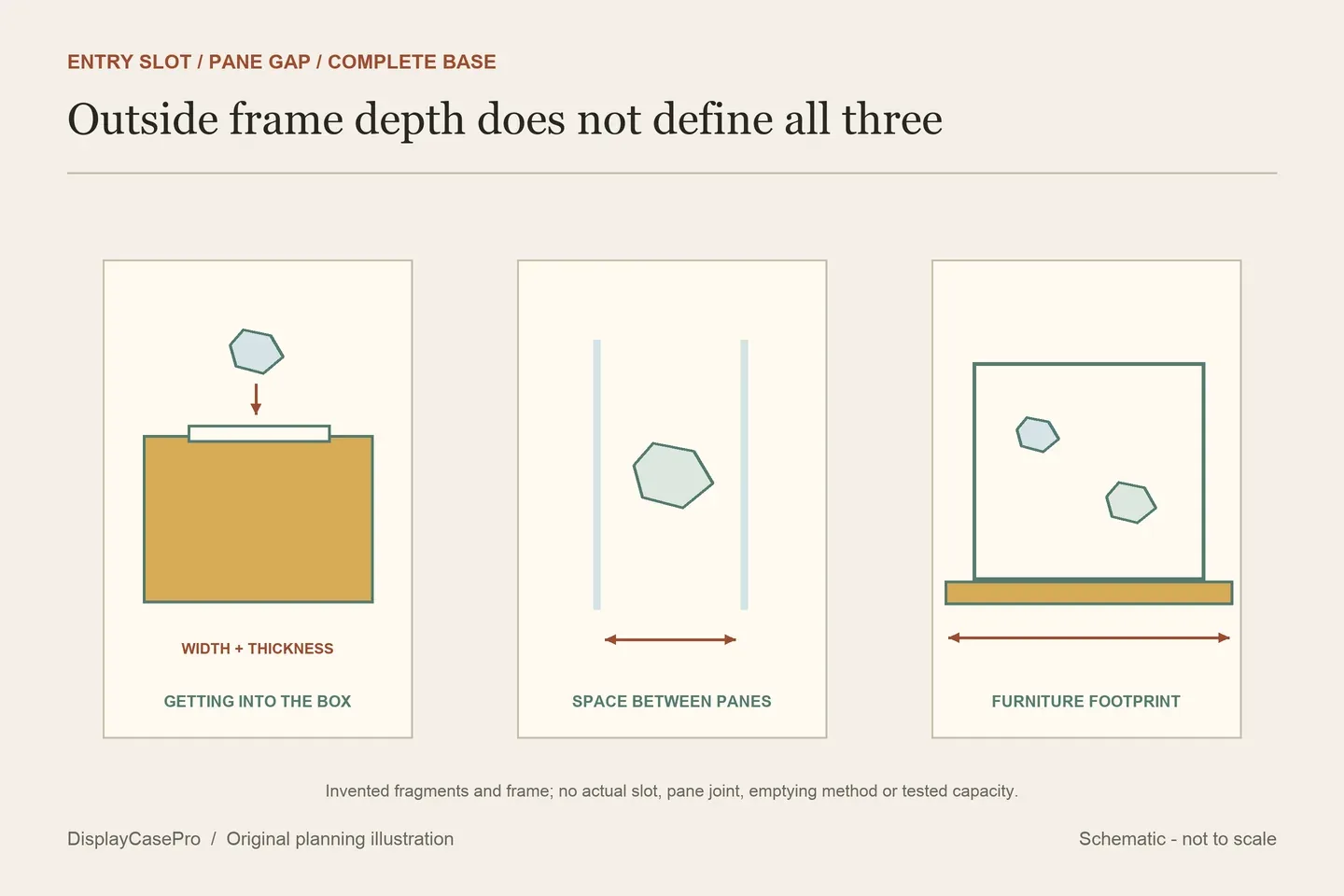
Choose a sea glass display case for either a growing collection or individually identifiable pieces. A top-fill silhouette, a two-pane window and a tray inside a cabinet provide different views and access. Check the actual entry opening, gap between panes and complete base separately; outside frame depth does not answer all three questions.
Choose what you want to see before filling a frame
An accumulating window can show a field of colors, while separated positions can keep each piece’s outline visible. Decide which pieces need individual identification before combining them. Overlapping fragments may hide the face or feature that made a particular find important to you.
Record the actual length, width and thickness of the largest or most awkward pieces. A curved fragment can occupy more front-to-back space than a flat piece of similar front width. Keep the intended orientation with those measurements.
For a mixed trip collection, identify whether glass, shells, stones and labels should share one loose chamber. Each has its own outline and condition. A display advertised for several types of beach finds does not establish that every combination should be packed together.
A stand, hanging system and divider set are distinct options
| Format | Useful presentation | Receiving question |
|---|---|---|
| Two-pane window | A collection viewed through both sides. | Clear gap, top opening, selected base and intended emptying sequence. |
| Top-fill silhouette | A growing collection within a decorative shape. | Exact entry width and thickness, chamber boundary and later retrieval. |
| Divided tray or cabinet | Pieces or trip groups kept individually identifiable. | Separate receiving positions, readable records and a clear route to one piece. |
| Ornament or lighted variant | A specifically selected small or illuminated display. | Its own contents, opening and supported arrangement rather than another version’s dimensions. |
Bling Beach Glass Windows’ shop separates stand, hanging and divider versions among its cards. Choose the exact combination. The category also contains a cap and gift card, so its product count should not be treated as a count of equivalent display cases.
SeaGlassDisplays’ featured products name single-sided, double-sided, shelf, window and lighted options. A shared shape does not make those versions interchangeable. Obtain the chosen product’s entry, cavity and support information before transferring a dimension from another version.
The piece must pass the entry and remain within the chamber
These descriptions were read on 18 October 2026. They are attributed specifications, without filling, fit or load tests by DisplayCasePro.
| Exact example | Published figures | What they describe |
|---|---|---|
| Bling Dreamcatcher with stand | Window H10¾ × W16¾ × D1½ in; gap between panes ⅝ in. | Whole window and separately stated pane gap. |
| Same Dreamcatcher attached base | W21 × D3½ in. | A larger furniture footprint than the window alone. |
| Anchor & Glass 8 × 4-in wave | Top slot 1 in wide: ½-in thickness for Standard, 1 in for Deep. | Entry dimensions; the shape size is not a labelled clear cavity. |
| Anchor & Glass 12 × 6-in wave | Top slot 1½ in wide: ½-in thickness for Standard, 1 in for Deep. | Selected size and version must stay together. |
The specific Dreamcatcher Window with Stand uses two tempered-glass panes and a removable top. Its 1½-inch outside depth is different from the ⅝-inch gap between panes. Keep the attached 21-inch-wide base in the placement record as well.
Anchor & Glass’ sea glass display range gives separate Standard and Deep fill openings for several shapes. Compare the intended piece’s complete profile with the selected slot and chamber. Passing the top opening is only one part of receiving it; do not force a fragment or assume a larger outside outline supplies more usable thickness.
Keep numerical claims attached to the exact product. Dreamcatcher’s published approximate engineering capacity is not a tested load for your collection or a rating for another frame. Neither a decorative outline nor a count of collected pieces establishes how a particular mixture will fill.
A cabinet can keep an important piece out of the overlapping pile
Completely Coastal’s cabinet guide shows glass-front cabinets, wall cabinets, recessed displays and hutches. These provide a different route for a collection that benefits from individually visible positions. The examples are inspiration, without a complete receiving or shelf-load specification for every pictured cabinet.
Give a significant piece or trip batch a simple identifier and retain the supported source information. Keep a collection photograph before adding pieces to a shared chamber. Similar colors do not establish a shared place, age or original object.
Beachcombing Magazine’s 2019 display article includes jars, bowls, trays, frames and shelves. Choose between decorative accumulation and separate retrieval deliberately. Its broad sunny-location suggestion is not a care or compatibility assessment of every mixed beach collection.
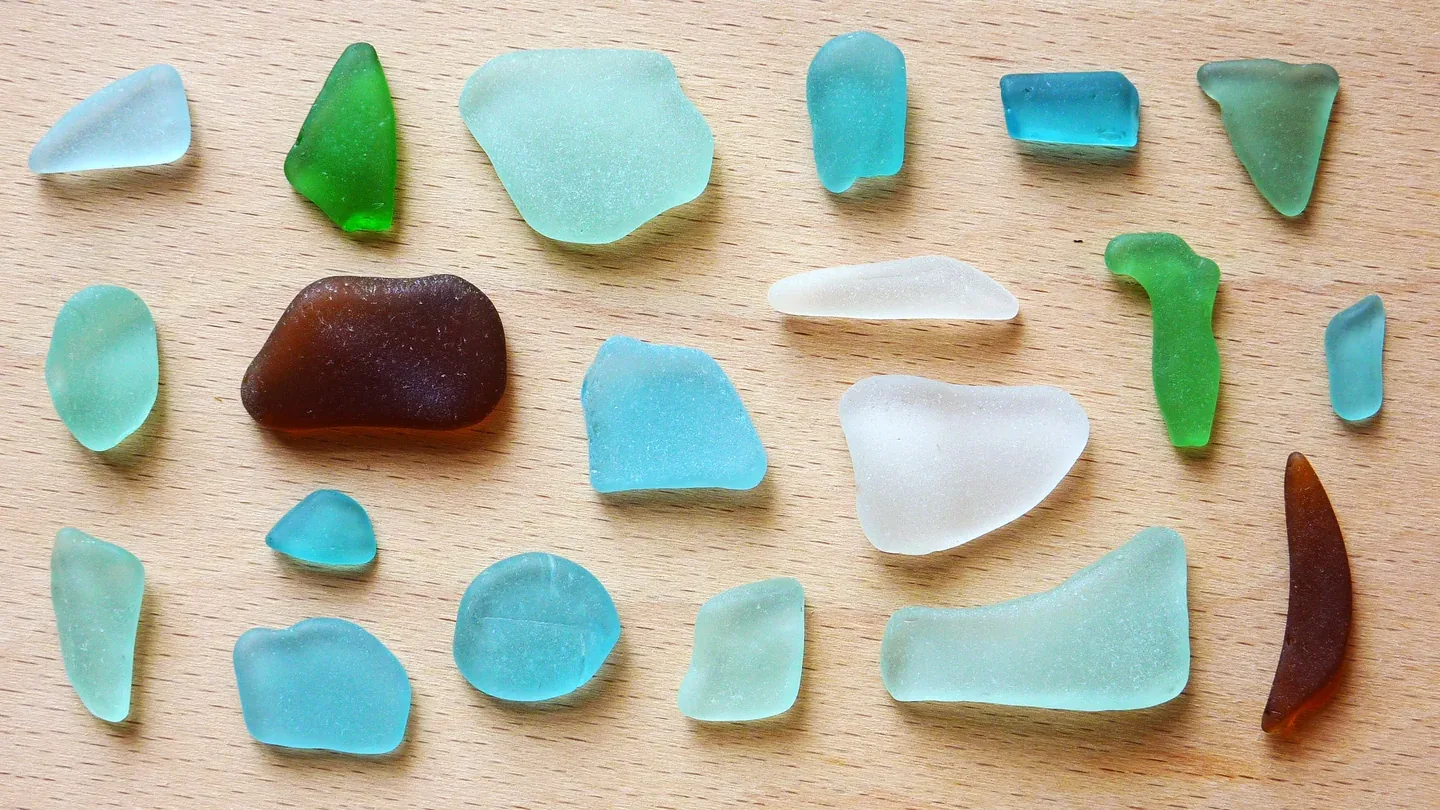
The cover photograph shows separate sea glass pieces, without identifying their ages or recommending the pictured surface as a support. Photo: Quercus acuta, CC BY-SA 4.0. Whole composition retained, proportionally resized and compressed to WebP; derivatives retain that license.

A top slot does not establish individual retrieval
Ask how the filled display is emptied and how one piece can be retrieved. A narrow top slot may be convenient for additions without providing the same route for selecting a particular buried fragment. Reserve a suitable receiving area before opening the container.
Dreamcatcher’s instructions describe removing the contents before sliding out a loose pane for cleaning. Keep that sequence with the exact product. A removable top or pane is not permission to pull the front away while loose pieces press against it.
Use the sea glass piece, slot and retrieval worksheet with the usable depth guide. The display lighting guide covers the separate task of viewing and reflections once the display’s materials, contents and opening are established.
Common questions
Is a 1½-inch-deep window clear for a 1½-inch-thick piece?
The cited Dreamcatcher separates that outside depth from a ⅝-inch pane gap. Obtain the selected display’s actual receiving boundaries.
Does a top-fill frame keep every piece individually visible?
Plan the view and identification first. Use separate positions for pieces whose outlines or records should remain accessible.
Comments
Share a display tip or ask a question.