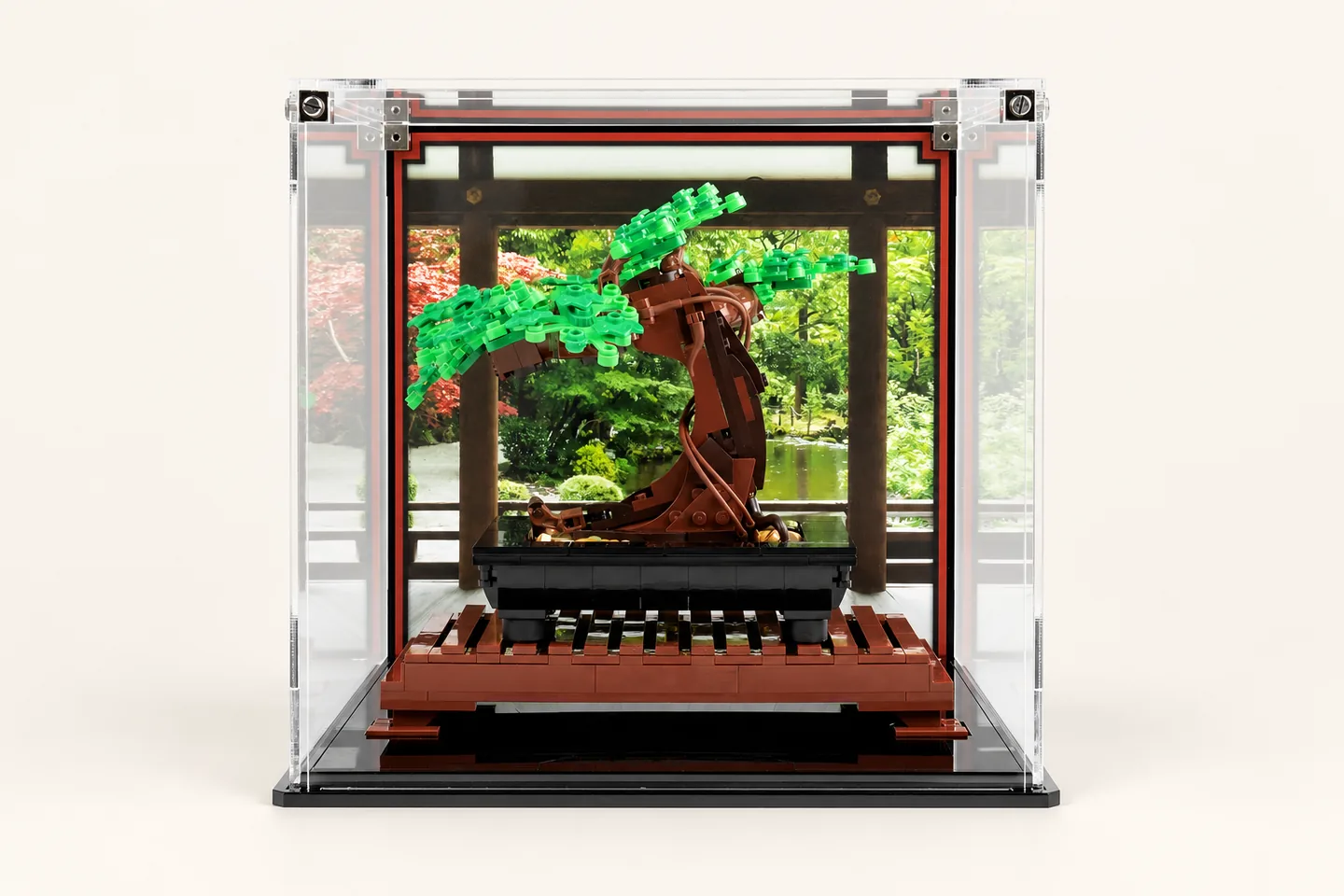
Cover reference: CubeBuff · used with permission · AI-assisted composition and tonal edits; reference illustration, not a product test.
To clean an acrylic display case, first identify the panel and follow the case maker’s care instructions. For a panel whose instructions allow routine wet cleaning, start with a clean, soft, lint-free cloth lightly moistened with water. Use mild soap only as directed, apply light pressure and avoid rubbing a dusty panel dry. Remove the collection before cleaning the inside.
The important distinction is between the acrylic sheet and the complete case. A method suitable for a bare panel may be unsuitable for a printed backdrop, coated surface, wooden base, adhesive joint or light fitting. Work through the component check below before choosing a cleaner.
Check the parts before you clean
| Part of the display | What to identify | Decision before cleaning |
|---|---|---|
| Clear panel | Acrylic grade and any surface coating | Use the sheet or case maker’s current cleaning directions for that surface. |
| Base and frame | Paint, timber, wrap, metal or another finish | Keep its care instructions separate from the panel instructions. |
| Printed background and labels | Whether they can be removed and whether wet cleaning is permitted | Remove or protect them according to their instructions. Do not assume they are washable. |
| Joints, seals and fasteners | Areas where liquid could reach another material | Control the amount of moisture and avoid flooding edges or joints. |
| Lighting or wiring | The exact equipment and its cleaning instructions | Follow its isolation and cleaning directions before working nearby. |
If you cannot identify a coating or finish, leave that part in the “instructions needed” column of your notes. A hidden-area check does not turn an unsupported cleaning product into an approved one.
Prepare a place for the cover and the collection
Decide where each part will go before opening the case. A large lift-off cover may need a second person or a different working surface, depending on the maker’s handling instructions. Avoid improvising a place for it while holding it above the model.
Move the objects, loose accessories and labels to a prepared space. Photograph the arrangement if it will be difficult to reconstruct. Keep the object-cleaning task separate: this guide concerns the enclosure, not the appropriate treatment of every material inside it.
If removing the cover is difficult on its usual shelf, revisit the display measurement and access checklist. Maintenance access is part of fit, alongside the final appearance.
Use a routine supported by the panel instructions
ACRYLITE’s sheet-care guidance describes light wiping with a water-moistened soft cloth. For heavier dirt, its routine includes mild soap or detergent with lukewarm water, light pressure, rinsing and blotting rather than vigorous dry rubbing. These are directions for its material; confirm their suitability for your finished case.
- Read the directions first. Record the case model, surface and approved method. Make a separate decision for any coating, finish or attached component.
- Use clean materials. Choose the cloth specified by the maker. Replace or clean it when it becomes dirty rather than carrying the same dirt across another panel.
- Start with the least intervention permitted. Follow the water-moistened routine if applicable. Do not scrub a dry, dusty surface to make it look clear quickly.
- Deal with remaining dirt within the instructions. Where washing is allowed, follow the specified cleaner, dilution and application method. A sheet-cleaning example is not permission to immerse a complete case.
- Finish as directed. Remove residues and blot or wipe using the approved method. Check edges, the base and other components before reassembly.
- Inspect before returning the collection. If you see new haze, fine cracks, a changed coating or a damaged joint, stop and ask the maker for advice.
Why dry rubbing and “glass cleaner” shortcuts can fail
PLEXIGLAS advises against rubbing its material completely dry, because this can generate static and may scratch the surface. Its indoor-care advice also uses a moist, soft cloth. A panel that attracts dust after cleaning therefore does not automatically need a stronger solvent.
The Canadian Conservation Institute’s acrylic-care note explains that abrasives can scratch acrylic and some solvents can cause fine cracking known as crazing. Read the product directions instead of treating “clear,” “plastic-safe” or “glass cleaner” as a complete compatibility specification.
Do not transfer an approval for one branded sheet, concentration or specialist application to an unidentified case. For ordinary display maintenance, escalating to stain-removal solvents, disinfectants or scratch-polishing compounds creates a different task. Obtain instructions for that task rather than adding it to a routine wipe-down.
Keep a care record for your particular case
Download the acrylic case care record. It has separate entries for the panel, coating, base, backdrop and joints, plus the instructions used and any unresolved question.
| Observation | Useful next step |
|---|---|
| Fingerprints remain after the permitted routine | Ask which mark-removal method is approved for the identified surface. |
| Dust returns but the panel is otherwise clear | Review the approved antistatic-care advice and where the case is opened. Do not infer a seal defect from the panel alone. |
| A scratch or persistent haze is visible | Distinguish existing damage from dirt with the maker. Avoid an unverified polishing treatment. |
| The panel and base have conflicting care instructions | Ask how the assembly should be separated or protected before proceeding. |
For the original material choice, use our acrylic versus glass comparison. It covers the buying decision; this checklist covers routine care of a case you can identify.
Research note: Prepared by DisplayCasePro from the manufacturer and conservation references linked above, checked 16 October 2026. This is a reference-led care checklist, not a reported cleaning trial or an approval of a particular cleaner for your case.
Comments
Share a display tip or ask a question.