Choose a sand collection display case around individually identified sample containers, then the rack, frame or cabinet that receives them. A jar’s volume, a frame’s face size and a cabinet’s shelf count describe different things. Keep the sample, closed container and display position linked so a changed arrangement does not lose its information.
Give the sample an identity that survives a new shelf position
Record the source wording, acquisition record and location only as specifically as the evidence supports. Separate a personally collected sample from one received through another collector. Similar grain color does not establish a common beach, mineral composition or collection date.
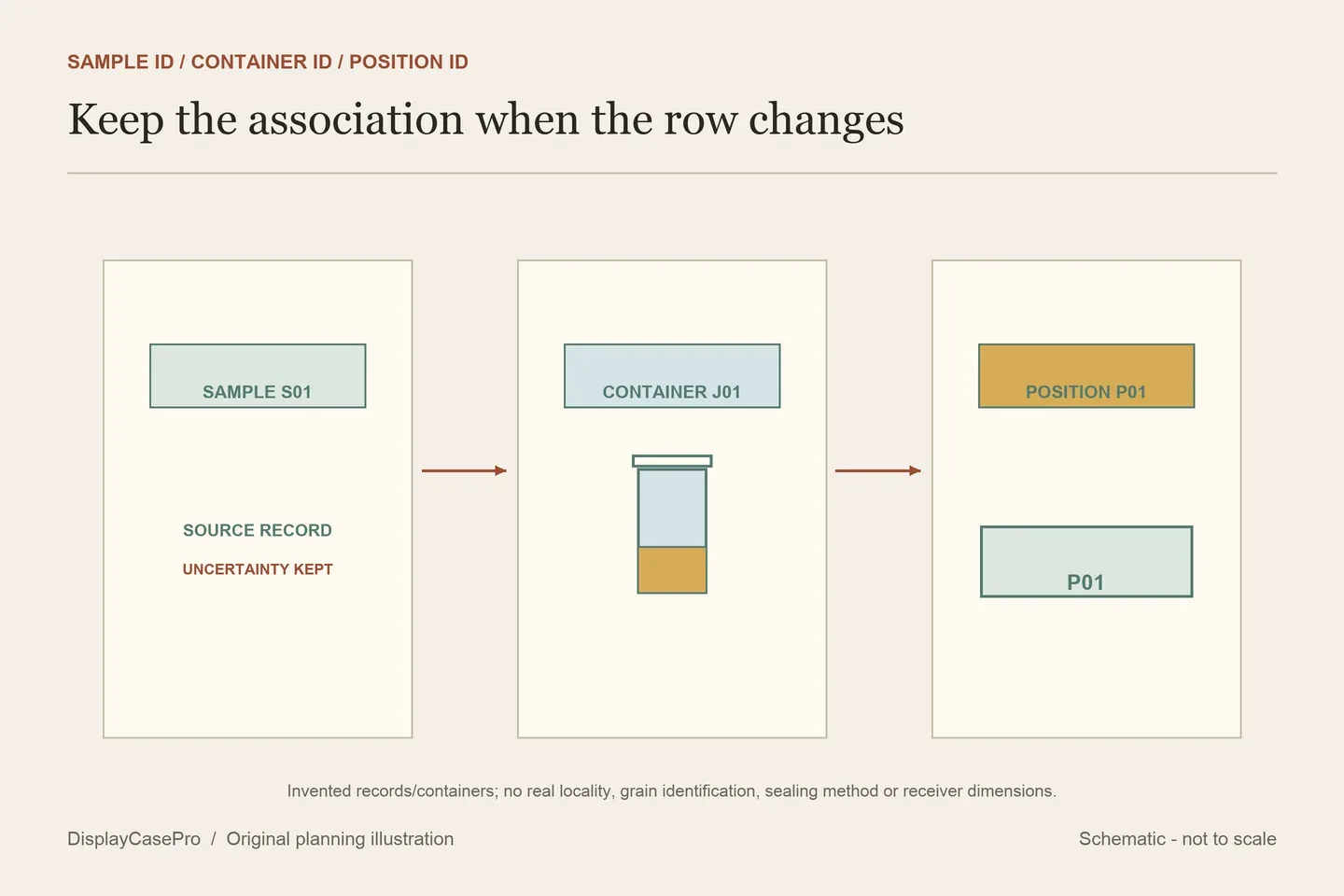
Give each sample a stable identifier. Link that identifier to its present container and display position; keep an old label or photograph in the associated record. A front caption can be short while the catalogue preserves the full supplied wording and uncertainty.
| Record | Keep stable | Update when needed |
|---|---|---|
| Sample ID | Its source wording, existing labels and documented history. | A corrected identification or better supported locality, with the earlier record retained. |
| Container ID | Which closed jar, vial or pot currently receives the sample. | A documented container change under the collection’s own handling procedure. |
| Position ID | The named shelf, rack or frame position. | The sample-container association when the display is rearranged. |
This separates an empty display position from a missing sample. A neat row can leave spare positions for additions without counting them as specimens already owned. Keep uncertain or unlabelled samples distinguishable instead of assigning a place name to complete a geographic sequence.
Choose whether the arrangement shows separate samples or layered decoration
Completely Coastal’s sand-display roundup includes individual bottles and jars, as well as layered decorative vessels. These are different display aims. If retaining each sample’s independent identity matters, plan separate containers rather than combining batches into a decorative layer.
| Format | Useful view | Receiving check |
|---|---|---|
| Jar rack | Repeated containers with a readable front label. | Actual closed jar profile, shelf boundary and independent removal. |
| Test-tube rack | Slender samples compared in a sequence. | Exact tube receiver, retained closure and supported projection. |
| Shallow pot frame | Small separate sample faces seen together. | Selected pot depth, complete frame cavity and retention in its final orientation. |
| Glazed cabinet | A selected group with room for a larger catalogue arrangement. | Usable shelf, door/frame obstructions and access to one closed container. |
Sadie Seasongoods’ personal spice-rack project uses retained glass jars and beach-name labels in a wooden rack. Treat that as a composition example. It is not a specification for every jar, a collection-care assessment or a requirement to repack existing samples.
Tropical Travel Girl’s personal collection account describes four-ounce bottles with location tags arranged on an etagere. The bottle volume does not give its outside diameter, closure height or the space occupied by a tag. Keep other souvenirs separately identified on a mixed shelf.
A nominal volume cannot choose the rack or outer frame
Record each closed container in its intended supported orientation. Include the lid or stopper and any retained tag that projects beyond the body. Use actual dimensions with units, rather than expecting two containers of the same stated volume to have identical profiles.
In Off the Beaten Press’s test-tube display account, the author reports a broken tube, a tight shadow-box arrangement and later changes to a shelf receiver. That is one person’s experience, without establishing an approved adhesive, drilling or O-ring method for another collection.
The useful question for a purchased receiver is which exact closed container it was designed to accept. Obtain the entrance, receiving shape and intended retention instructions. A tube that appears narrow enough from the front can still meet a fitting, frame pane or label at another point.
Chica and Jo’s tutorial describes a personal eleven-by-fourteen-inch acrylic box-frame arrangement using small round pots. It also names a separate twenty-four-jar bead-container example. These are historical project descriptions, not current product availability or a universal sample capacity.
Keep the frame’s nominal face separate from its clear cavity and the complete pots. A source’s fitted group cannot establish that another pot shape, lid or retaining system will work. This guide does not prescribe the tutorial’s tape, glue or marking process.
Check identification through the closed front
Make a position plan using existing photographs or empty equivalent container outlines. Choose whether the display should explain a documented region, a trip or visible sample differences. Keep that heading distinct from an unsupported geological identification.
Check the normal viewing height, door rails and reflections. A low container number can disappear behind a shelf edge while the sand remains visible. Put the visible identifier where it can be read and keep the original label associated with the record, without obscuring it with a replacement caption.
Use the display lighting guide for the separate task of viewing and reflections after the container and receiving arrangement are resolved. A lit cabinet does not supply missing specimen history or demonstrate the contents’ material requirements.
Make one container removable without disturbing its neighbours
Keep the selected sample in its existing closed container for the display plan. Resolve any later opening or transfer under its own appropriate procedure. The enclosure choice should account for the complete retained object, rather than require a shorter lid or a discarded tag to fit a row.
Plan a clear route to the selected container and a waiting position for the supported item. If reaching a rear row requires moving several unrelated samples, change the paper layout or display fewer items. Record the new position when a container returns.
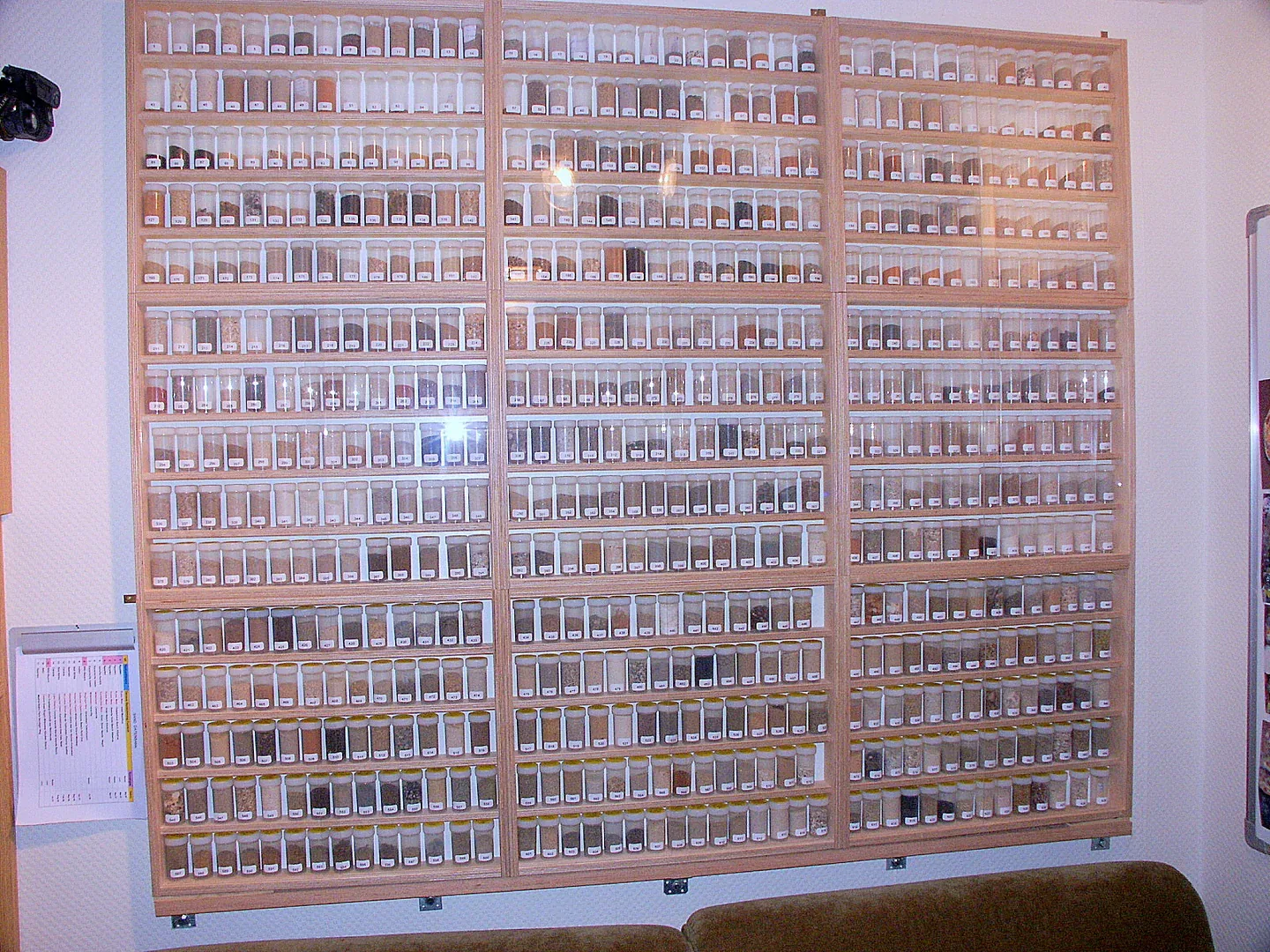
Cover photo: labormikro’s sand-sample collection, CC BY-SA 2.0. Whole composition retained, proportionally resized and compressed to WebP; derivatives retain the license. Labels, reflections and surrounding objects remain. The image does not verify every sample, the stated collection count or cabinet loading.

Use the sample, container and position worksheet with the usable depth guide for the chosen outer enclosure’s finished receiving boundary.
Common questions
Does a twenty-four-jar container hold twenty-four identified samples?
Count the documented occupied containers separately from blank positions. One jar’s contents and identity still need their own record.
Can I choose a frame from its face dimensions?
Obtain its cavity, actual pot receiver and intended retention. Include the full closed containers and final display orientation.
Comments
Share a display tip or ask a question.