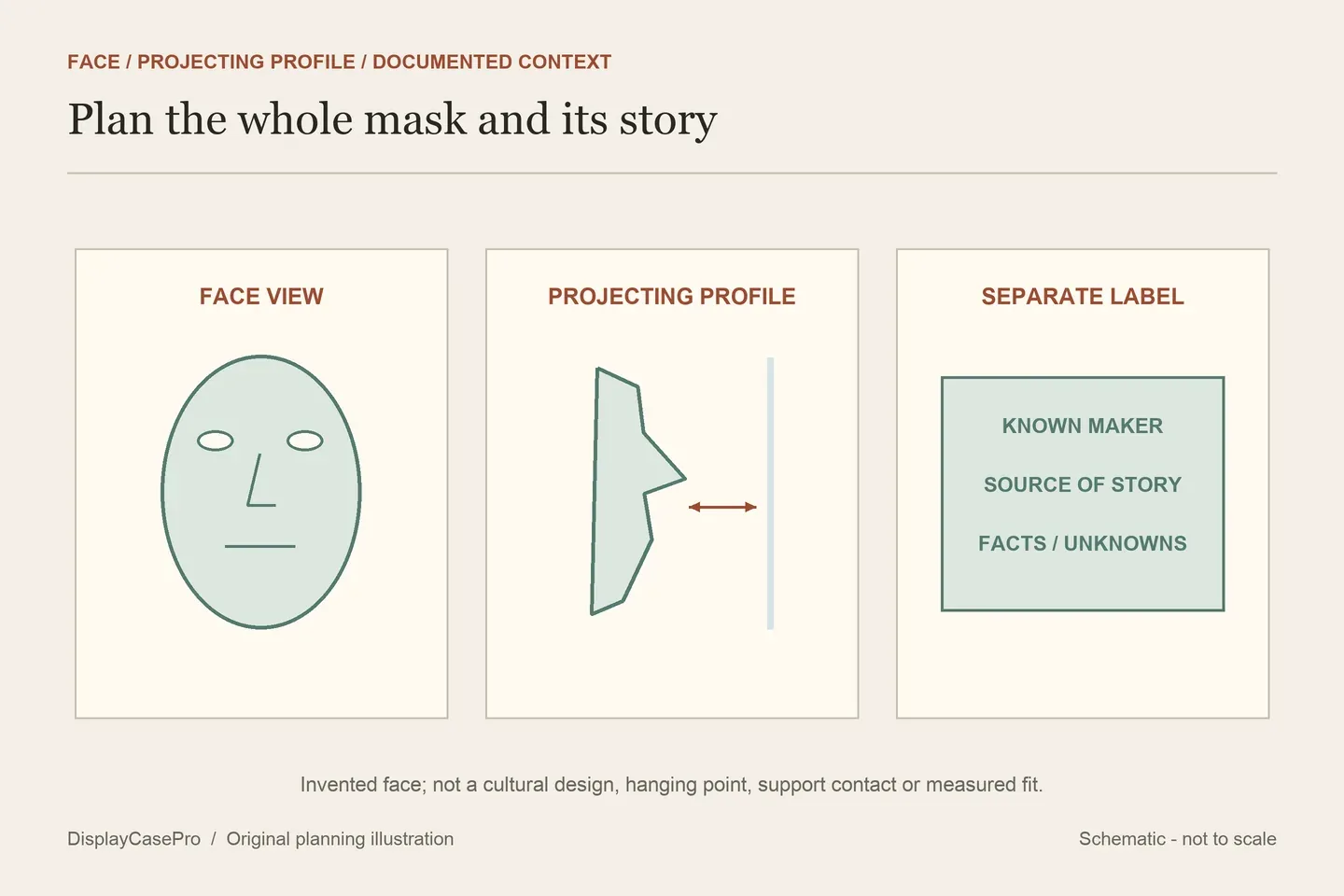
Display decorative masks in a setting that suits the complete object: a wall presentation, a supported stand or a sufficiently deep shadow box. Choose the face and viewing angle you want to show, then resolve the actual support, projecting features and context before arranging the surrounding decor.
A dramatic face can look convincing in a room photograph while its reverse remains hidden. That unseen side may determine whether the arrangement is practical. Start with the mask you own, including its materials and existing fittings, rather than a hanging method chosen for another piece.
Give the face an accurate introduction
Record the maker, place, purchase history and intended purpose where those facts are documented. Keep uncertainty visible. A mask sold for decorative display, a performance mask and an unidentified inherited object can resemble one another without having the same history or appropriate presentation.
A brief label can identify the source of a story: a maker’s description, an original receipt or a family recollection. Avoid assigning a cultural origin or ceremonial meaning from a facial feature or color alone. Preserve the original description with its source rather than silently turning a seller’s attribution into an established fact.
From The Andes’ display guide brings context into a discussion often limited to wall styling. Use that distinction when planning your label. Questions about an object’s specific cultural or ceremonial context need information about that object and its originating makers or community.
Choose the setting before buying the surrounding frame
Consider the normal viewing position and how much of the three-dimensional form should remain visible. A front-only arrangement can emphasize expression; an angled presentation may reveal carving or applied decoration that disappears straight on. Try the proposed view with a photograph or paper outline before moving a fragile object repeatedly.
| Setting | Useful for | Resolve first |
|---|---|---|
| Wall | A clear face view or a coherent group. | The mask’s approved support and the separate wall installation. |
| Stand | A freestanding or angled view. | Suitable contacts, restraint and the full supported footprint. |
| Shadow box | A defined background with a surrounding cover. | The complete supported depth, fibers, glazing and opening route. |
Italian World’s Venetian-mask ideas include wall groups, frames and table displays. Those are different compositions, not interchangeable mounting instructions. A tray or decorative backdrop does not supply the object’s restraint, and a deep-looking frame does not establish clearance in front of a projecting nose.
Read the reverse without turning every feature into a hanger
Use existing records and an appropriate inspection to identify fittings, ties, repairs and the shape of the hollow back. An old cord, eye opening or thin edge is not automatically a suitable load-bearing point. Keep the object’s support separate from the fixing that attaches a board or enclosure to the wall.
Africa Direct’s display article describes several very different arrangements, including custom bases and suspension methods. That variety is a reason to ask for a support matched to the particular object. Do not transfer wire-through-eyehole or internal-filler suggestions to an unassessed mask.
For a commissioned support, explain which surfaces must remain visible and where contact is suitable. Ask how the mask is restrained and released. A mount that hides neatly behind the face still needs to accommodate the actual material, condition and any decoration around the perimeter.
Include the features that disappear in a front photograph
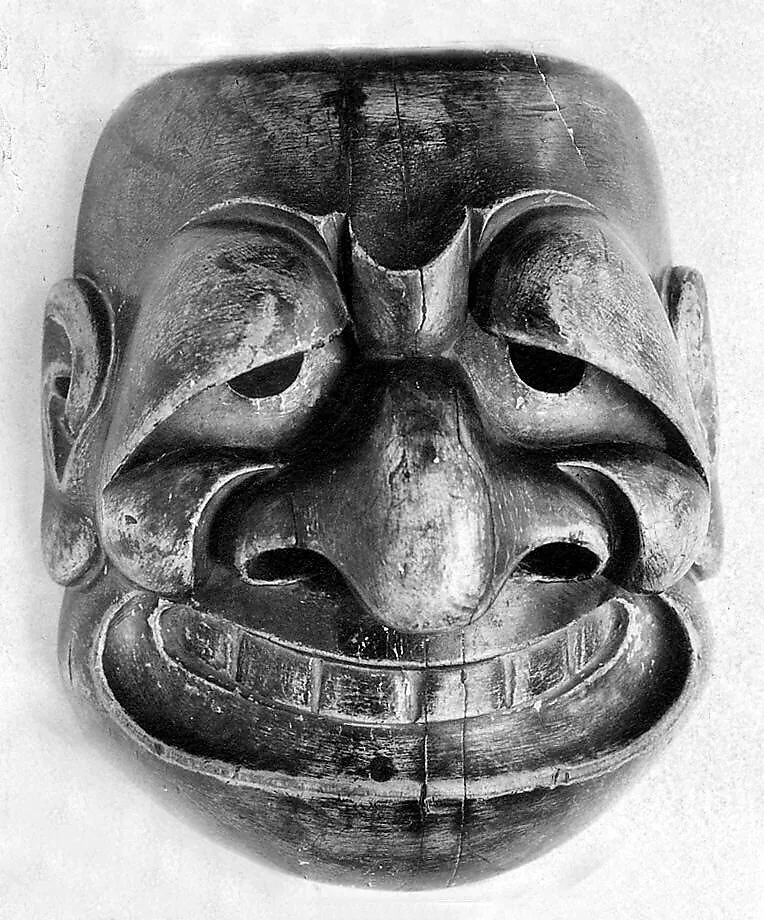
Record the complete mask in its intended supported position. Include protrusions, retained ties and applied fibers without compressing them merely to fit a smaller box. A nominal frame opening may describe the visible front rectangle rather than the cavity behind it.
| Feature | Keep visible | Question to resolve |
|---|---|---|
| Projecting face | Nose, chin and side profile. | Clear space in the chosen orientation. |
| Applied decoration | Loose, raised or extending elements. | Contact, restraint and space around them. |
| Hollow reverse | Fittings, marks and relevant condition records. | A support that suits the actual back. |
| Context label | Documented identity and uncertainty. | A separate readable position and record. |
Use the shadow-box usable-depth guide to separate outside depth from the room above the completed backing and mount. Check the actual opening too: a face that fits behind the front may still need a different route for insertion and removal.
Let a group explain itself without crowding the objects
Choose a relationship you can describe: one maker, a documented place, a shared purchase story or a deliberate comparison of forms. A visually similar group need not be presented as one cultural tradition. Plan labels alongside the masks, with enough separation to read each complete silhouette.
PaulSkiArt’s guide emphasizes a prominent wall and related decor, while Masks of the World explores a single focal piece. Either scale can work. Check expression and shadows from the actual seated or standing view; choose lighting with the object’s assessed materials in mind rather than a universal wattage or strip-light recipe.
Complete the decorative mask display worksheet with the intended view, approved support, complete outline and source of the label. Keep photographs of the accepted arrangement with those records so a later frame or lighting change can be checked against the same decisions.
Common questions
Can the original ties carry the mask?
Have their intended role and current suitability established for the actual object. A tie fitted for wearing or an aged display cord is not a universal hanging specification.
Does a shadow box have to hide the reverse?
The support and enclosure determine access. Keep an appropriate reverse photograph or existing record with the label when the finished presentation obscures information you want to retain.
Comments
Share a display tip or ask a question.