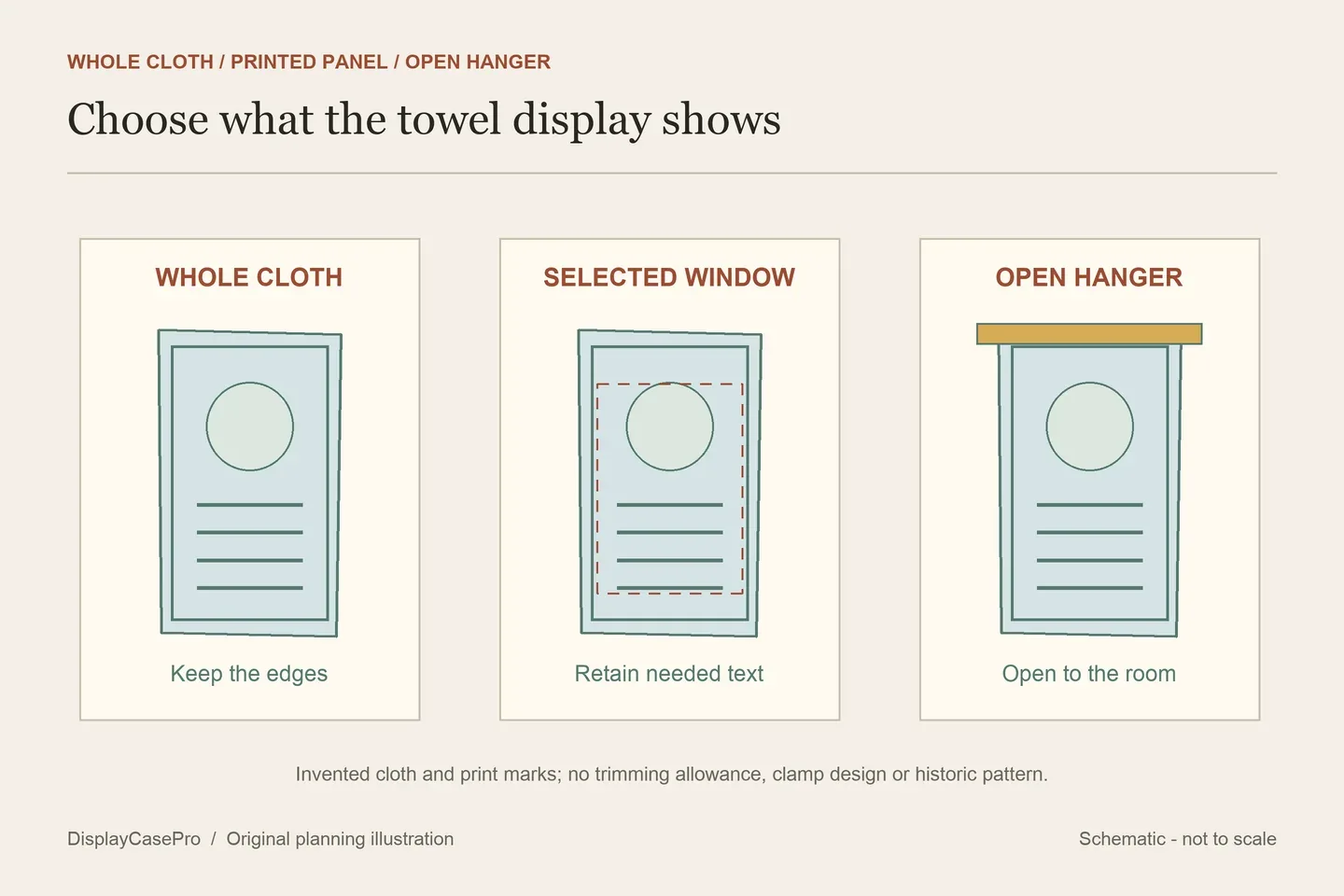
To frame a tea towel, decide whether to show the whole cloth or a selected printed panel, then choose a support that accommodates the actual hems, labels and reverse. A glazed picture frame and an open hanging strip create different displays. Start with what needs to remain visible and whether the towel will still be used.
Decide whether this is working linen or a display object
A souvenir map, illustrated recipe, photographic print and embroidered family towel need different decisions even when sold under the same product name. Record the design, maker or source if known, material information and condition. Keep an uncertain date or material marked as uncertain.
Decide whether the towel is retiring from kitchen use, temporarily displayed or already collected as an object. A towel that must return to drying dishes needs a practical release and handling arrangement. An older keepsake may need assessment before being moved into a frame at all.
Record the hanging loop, care label, sewn edge and any meaningful writing on the reverse. Do not remove these just because a decorating tutorial trims its own towel. Equally, stains and old folds are condition information, not an automatic instruction to wash, bleach or press the cloth for display.
Map the print before choosing a frame size
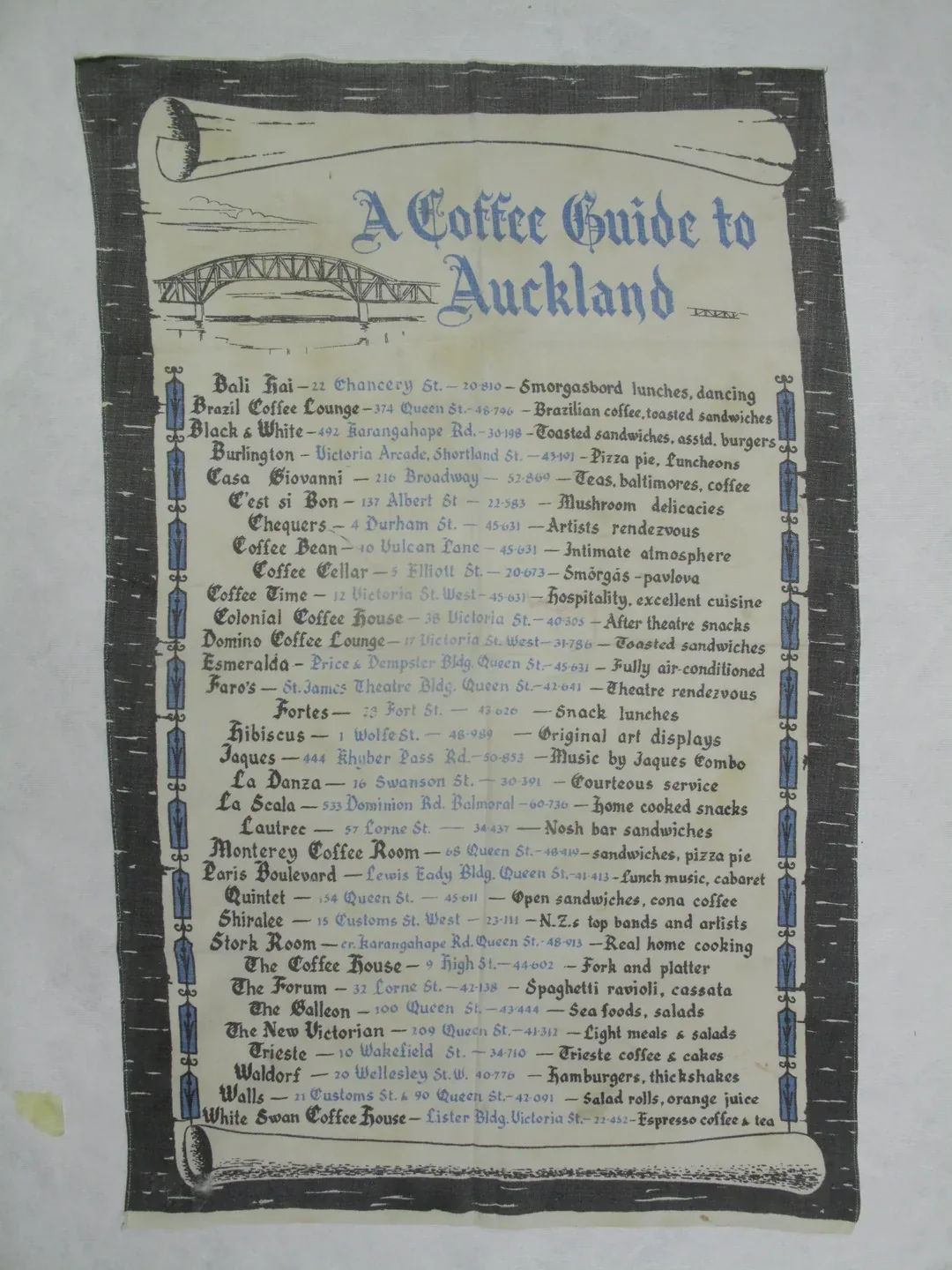
Photograph the towel with its edges and intended orientation visible. Mark the main illustration, outer border, signature and the smallest text you want to read. A city guide or recipe can lose its meaning if the frame shows the central picture while hiding the numbered key or ingredients.
Measure the whole cloth, including its actual unevenness and retained hems. Then define the proposed visible area separately. A window can conceal part of a towel without requiring that cloth to be cut off; the hidden material and its support still need to fit the assembly.
| Presentation | What the viewer sees | Resolve before ordering |
|---|---|---|
| Whole cloth in a glazed frame | The complete printed field, edges and chosen labels or loop. | Support around the edges, hem bulk, attachment and the finished assembly behind the glazing. |
| Printed panel within a window | A selected motif, recipe or scene. | The exact opening, all necessary text, and where the intact remaining cloth goes if it is retained. |
| Open strip or hanger display | Most of the hanging cloth, with an edge held or concealed by the chosen system. | What contacts or grips the fabric, later release and the lack of an enclosing front and sides. |
A frame size listed in a tutorial belongs to that project. Check how the seller defines its sizes and approve the actual window over a reference image. Do not order from the name “standard tea towel” or assume that a towel and frame with similar labels will fit together.

Separate each tutorial’s project from your own towel
These five independent-site pages were read on 19 October 2026. They show different routes into towel wall art. Use them to identify the format and the missing decisions rather than combining their preparation and attachment steps.
| Source | What the project shows | Check for your towel |
|---|---|---|
| Elizabeth Wade Studio | An artist’s towel-and-frame project with its own dimensions and preparation steps. | The complete print and retained edges; its pressure, adhesive and trimming choices are not general instructions. |
| Kara Rosenlund | A quick photographic-linen towel display using a picture frame. | Your current frame and cloth; historical stock, price and speed do not specify today’s assembly. |
| Jones Design Company | A simple towel-to-kitchen-art project. | The attachment and component sizes, which the short account does not fully specify. |
| HGTV | A cardstock-and-glue craft method with folding or cutting decisions. | Whether any alteration is acceptable; this is not an assessed mount for an irreplaceable textile. |
| The Nonsense Maker | Glazed framing alongside open strips, rods, clips and other displays. | Actual fabric contact and exposure; a hanging strip is not an enclosed case. |
In particular, instructions to iron hot, spray adhesive, remove a tag or press cloth against a front panel should not carry over automatically to a different towel. A decorating project can make those choices for its own material while leaving your original’s suitability unresolved.
Resolve the support, hidden cloth and glazing as one assembly
For a glazed frame, ask how the towel will be supported and attached, how its hems and loop will be accommodated, and what can be seen at the window. If part of the cloth will sit behind the visible panel, identify that arrangement before approving the frame depth. Do not rely on being able to force the back closed.
The Canadian Conservation Institute’s small, light, flat textile guidance is a useful reference for discussing condition and support. It is not approval to apply a craft adhesive or a standard stitch layout to every towel. Seek specialist advice for fragile or soiled examples.
Embroidery, an applied patch or a heavy hem changes the package compared with a flat printed field. Have the actual mount assessed, including separation from the glazing. Use the usable frame-depth guide to record the available receiving space once that package is defined.
For an open hanger, identify precisely which edge is held and how the towel is released. A product described as magnetic or wooden still needs an appropriate contact arrangement for the particular textile. It leaves cloth open to the room and does not supply the enclosure of a glazed frame.
Check small text and the actual kitchen environment
Use a paper reference image to test the proposed position before mounting the original. From the intended viewing place, can you read the recipe, place names or numbered key? If only the illustration is readable, decide whether that meets the purpose of the display or whether a closer viewing position is needed.
Observe the wall during ordinary cooking and cleaning. Note splashes, steam, grease, daylight and how often someone must reach past the display. A room label such as “kitchen art” does not make every kitchen wall suitable. Choose another position or room if the observed conditions conflict with caring for the towel.
Also plan access. A framed towel that may be returned to use needs a clear removal route, while an open hanger makes contact with the fabric more immediate. Keep handling and cleaning instructions specific to the completed display and the actual textile.
Keep the layout, attachment and object history together
Use the tea towel display record for whole-cloth measurements, retained text and borders, frame or hanger choice, mount proposal and room observations. Save the reference proof showing the intended visible area.
No tea towel, craft adhesive, hanger, glazing or preservation outcome was physically tested for this article. The museum photograph is an attributed design reference, not evidence that a proposed display method has been used on that object.
Comments
Share a display tip or ask a question.