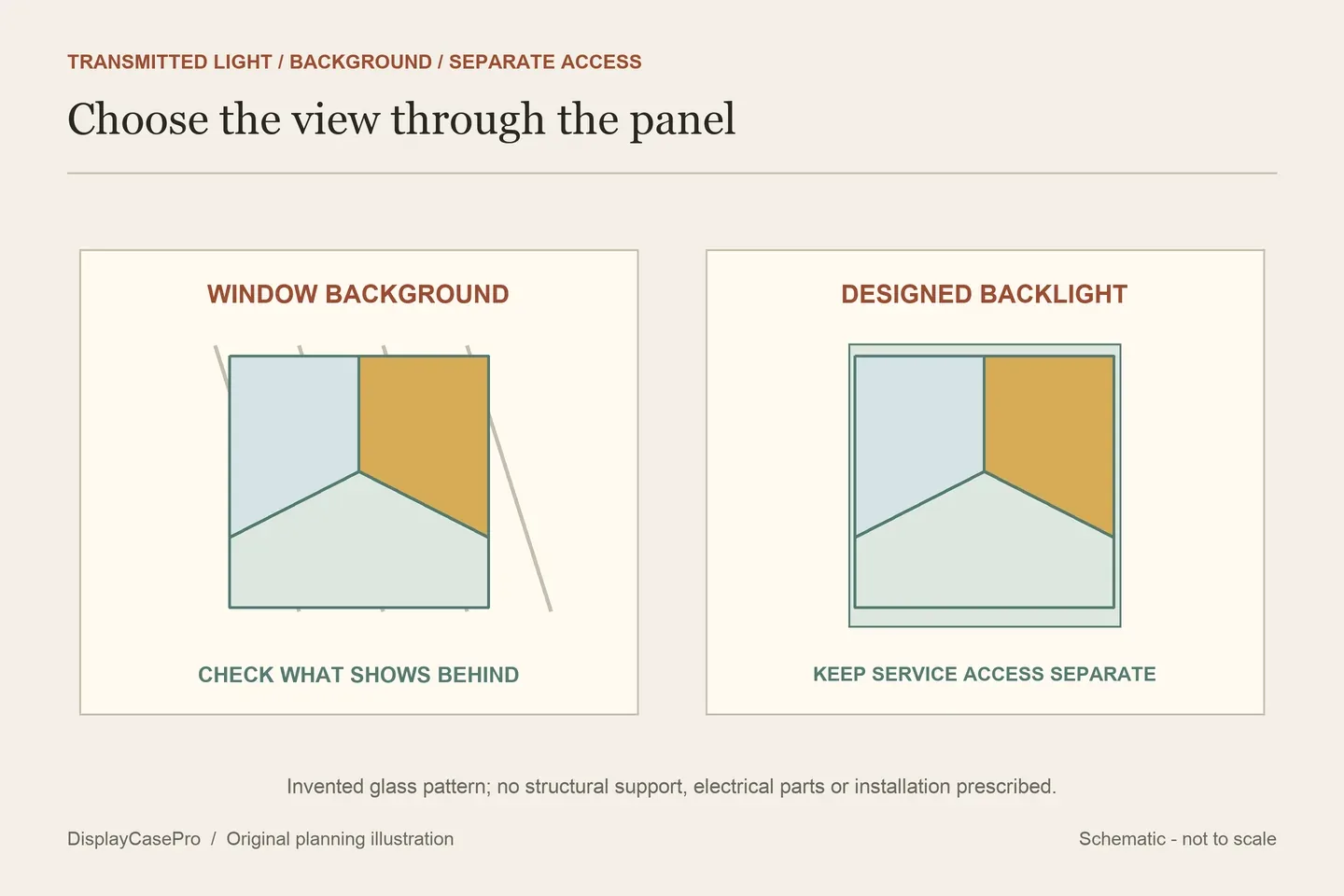
Display a stained glass panel by choosing the view and light first, then resolving support for that particular panel. A window, a freestanding stand and a backlit wall display show the glass differently and need different space, access and installation arrangements.
Begin with an existing panel and its documented construction. A small contemporary suncatcher, a framed architectural panel and a repaired historic piece are different objects. Ask the maker or a stained-glass conservator which supports and display positions are appropriate before moving it between trial locations.
Start with the complete panel and existing frame
Record whether the panel already has a structural frame or intended hanging points. Note loose joints, damaged glass, old repairs and any movement in the surrounding frame without testing them by flexing or tugging. Have uncertain condition assessed before choosing a new mount.
Keep the object’s dimensions separate from its complete supported outline. Include the existing frame, projections and approved attachments. If several sections belong to one work, establish how each section is supported rather than assuming the surrounding decorative border carries everything.
A portable display also differs from installing glass into a building. Scottish Stained Glass discusses freestanding pieces, wall displays, room dividers and transoms. The first two can help you consider a retained artwork’s setting; altering a door, partition or architectural opening is a separate project.
Choose between changing daylight and a controlled view
A window can give the panel a changing appearance across the day. A designed lightbox can provide a view when daylight is absent. A shelf or wall with front lighting emphasizes a different aspect of the glass and its texture. Decide which experience you want at the times you will actually look at it.
| Setting | What to inspect | Resolve first |
|---|---|---|
| Window | Changing light and the view through clear areas. | Approved support, window operation and access. |
| Stand | The panel from normal room viewpoints. | Complete supported footprint and protection from knocks. |
| Lightbox | Even illumination and the diffuser’s appearance. | Panel support, equipment instructions and service access. |
Thomas Critchlow Art Glass compares window, tabletop and wall presentations. Use the range of settings to form a brief, rather than treating its suggested hanging materials as suitable for every panel.
Make a room plan with the intended viewing positions and the panel’s outline. Compare a photograph or other agreed layout reference at those positions before repeatedly moving a fragile panel. Include the evening view: a window that works beautifully in daylight can become a dark background after sunset.
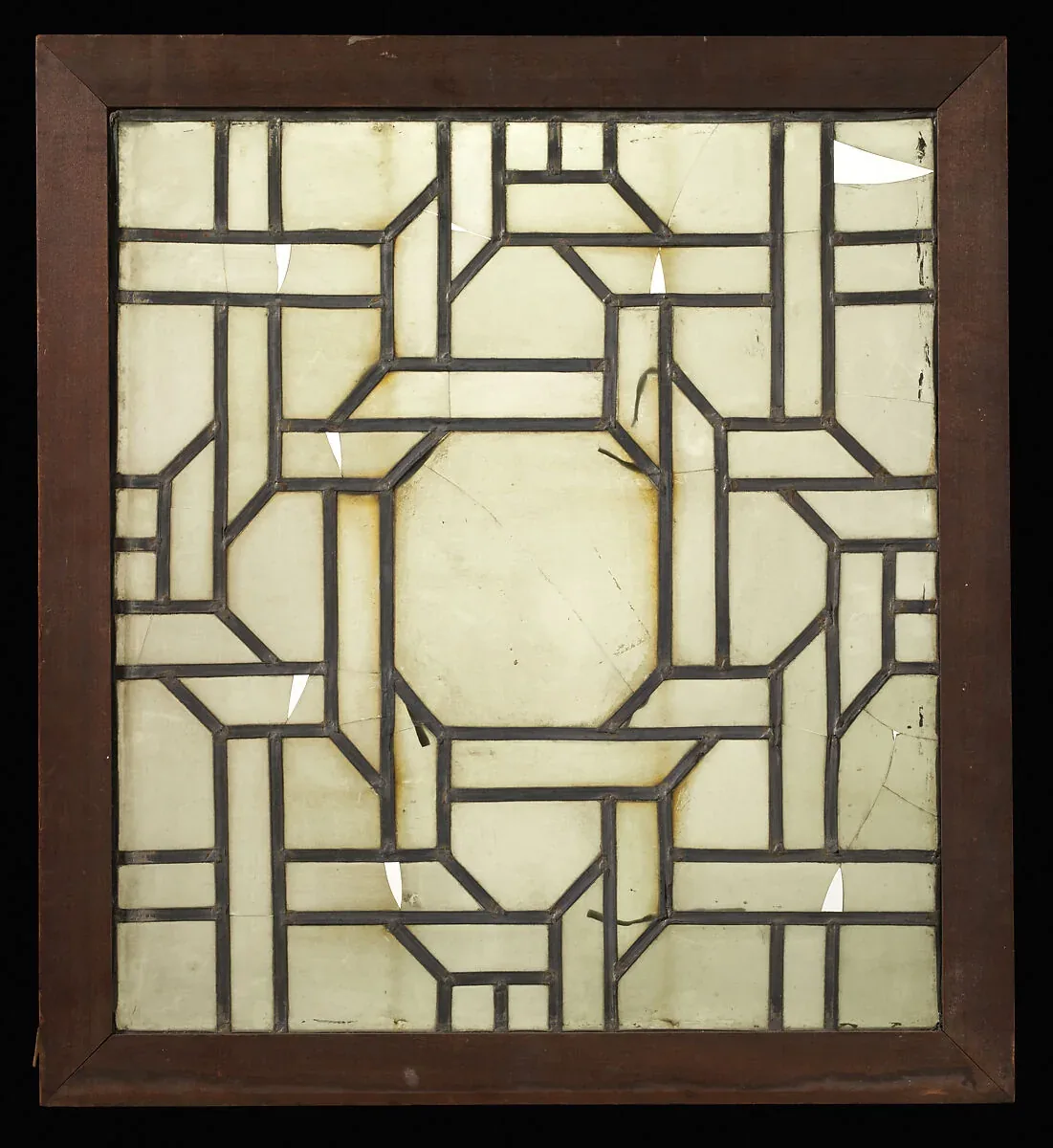
Look through the glass, not just at its outline
Clear and lightly decorated areas can reveal the scene behind the panel. Check whether a window latch, curtain, shelf object or light source interrupts an important part of the image. A plain background may give a calmer view, but can also change the character of the glass.
Everything Stained Glass’s student lightbox examples show how a diffuser can hide individual lights, while noting that diffusion can reduce the variations in glass and light that an artist values. Compare the complete appearance rather than choosing a diffuser only because it produces an evenly bright rectangle.
Ask the designer to demonstrate the proposed light and diffuser with an appropriate sample or approved trial. Check from the side as well as straight ahead. Keep these appearance decisions separate from mounting, ventilation and electrical requirements.
Have the load path approved for this panel
Specify what carries the panel, where the support contacts it and how the arrangement connects to the wall, furniture or other structure. Record the completed weight where it can be established appropriately. A decorative chain’s appearance or an available hole does not settle those questions.
Picture Hanging Systems gives a general chain-and-hook sequence. A tug on an assembled hanger is not a substitute for confirming the panel, attachments, structure and intended load with the relevant maker or installer.
There is also conflicting advice online about lightweight hanging materials. TLC Stained Glass advises against suction cups, ribbon and fishing line, and discusses the direction of forces on hanging points. Ask the panel maker to approve the actual arrangement instead of resolving that disagreement by choosing the most convenient material.
| Part | Record | Who should clarify it |
|---|---|---|
| Panel | Construction, condition and existing fittings. | Maker or stained-glass conservator. |
| Mount | Supported outline, contacts and full load path. | Support designer and installer. |
| Light | Exact equipment, diffuser and operating instructions. | Lighting supplier or qualified installer. |
| Access | Separate panel removal and equipment servicing. | Everyone responsible for the assembly. |
Leave a way to service the light without disturbing the glass
The illustrated lightbox project on Everything Stained Glass uses a hinged arrangement to reach components. Treat that as a reason to discuss servicing with the maker, rather than a hinge or wiring recipe to copy. Ask how the selected lights and controls can be reached, what the equipment requires for heat and ventilation, and whether routine servicing can leave the supported panel in place.
Confirm the finished receiving depth after the support and lighting arrangement are defined. Our usable-depth guide explains why an outer box depth does not describe the available space around a completed mount. A lightbox also needs the equipment’s specified clearances and service route.
Record these decisions in the stained glass display worksheet. Keep the installation instructions and the person responsible for removal with the record.
Common questions
Does stained glass have to hang in a window?
No. A suitable stand or designed wall display can provide another view. The choice still depends on the panel’s support and the light you want to see through it.
Does choosing LED equipment settle heat and access?
No. Check the exact system’s instructions and complete enclosure design. A lamp type alone is not a ventilation or servicing specification.
Comments
Share a display tip or ask a question.