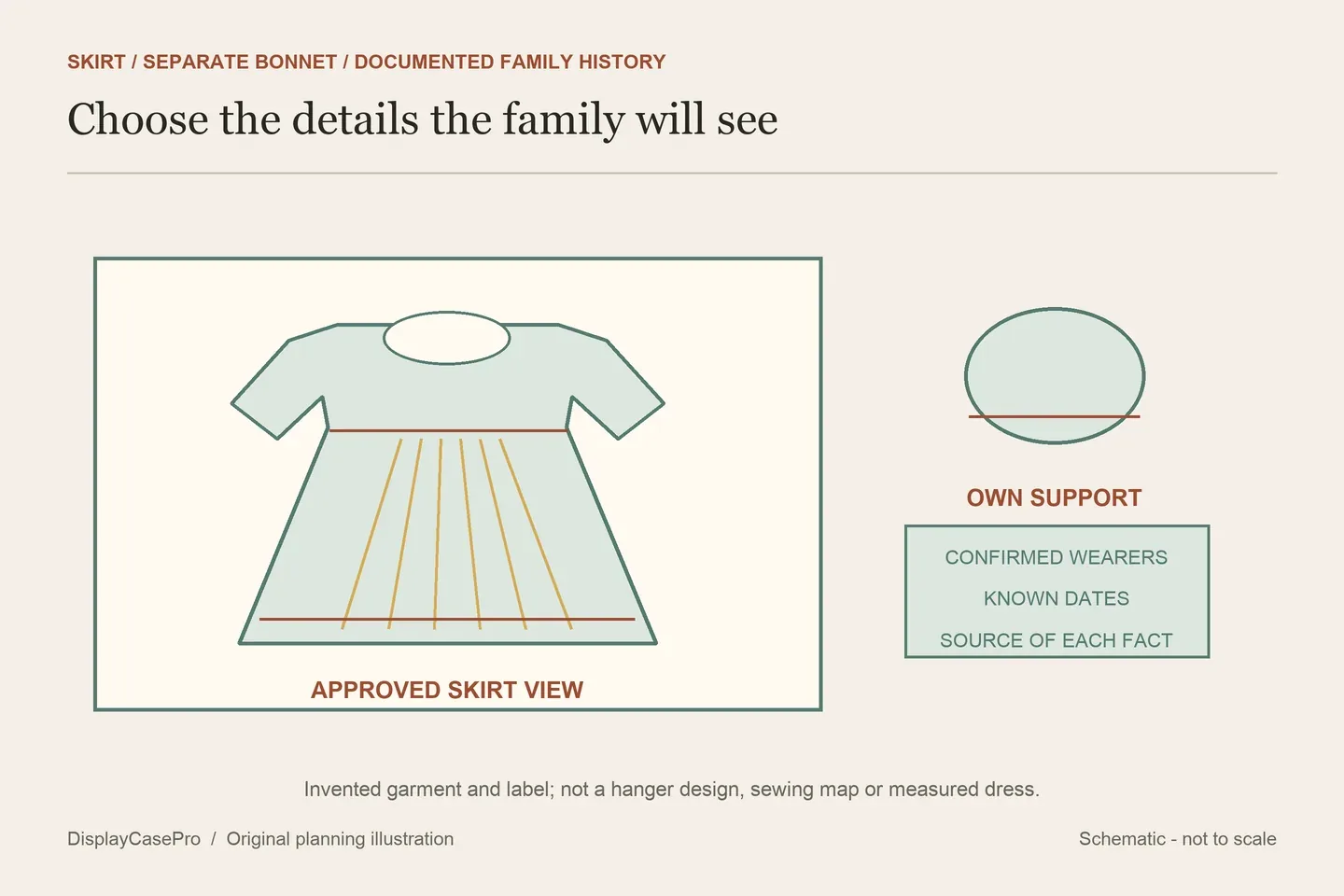
Display a christening gown by choosing the skirt and lace details you want visible, resolving support for the garment and bonnet, and planning access if the family may use it again. The long gown, small accessories and written family record each need their own place. Order a frame around that approved composition.
Decide whether the gown will be worn again
A gown retained for another sibling or generation has a different access requirement from one being retired from wear. Write that intention down before approving an attachment. A frame described as reversible does not promise the garment can return to use without assessment or any change.
Record known makers, materials, repairs and previous wearers. Keep uncertain family stories marked as uncertain. Note old stains, weak lace, splits, loose seams or earlier fastenings without trying to clean or straighten them for a photograph. A fragile or historically important gown needs appropriate specialist assessment.
Crystal Cleaning Center’s vintage-gown article separates restoration, later wear, storage and display. Those are different decisions. Its cleaning and hanger suggestions do not supply a treatment or support prescription for an unknown heirloom.
Choose which layers and details tell the story
Use existing photographs to mark the neckline, sleeves, long skirt, hem and any embroidery hidden on an inner skirt. Decide which of these must remain visible. If changing the arrangement would require manipulating fragile fabric, let the specialist preparing the mount develop the layout proof.
The Frame and I’s family-gown project includes a composition arranged to reveal embroidery on an inner skirt, as well as a bonnet displayed separately. These are useful alternatives to showing only the frontmost layer. Its individual sewing and material choices are not a universal pattern to copy.
| View | What it emphasizes | Resolve first |
|---|---|---|
| Full skirt | The gown’s length, hem and intended silhouette. | Support for the bodice, sleeves and retained skirt arrangement. |
| Inner detail | Embroidery or lace on a selected underlying layer. | Whether that layer can be shown without stressing the gown. |
| Family group | A gown, independently supported bonnet and related record. | Separate object positions, supports and a legible label. |
A baby-clothing size is not a frame dimension. Do Say Give’s nursery project uses frames for several small dresses but considers custom framing for a longer baptism gown. Measure the actual approved outline instead of applying a frame size from another child’s outfit or folding the skirt merely to fit a ready-made opening.
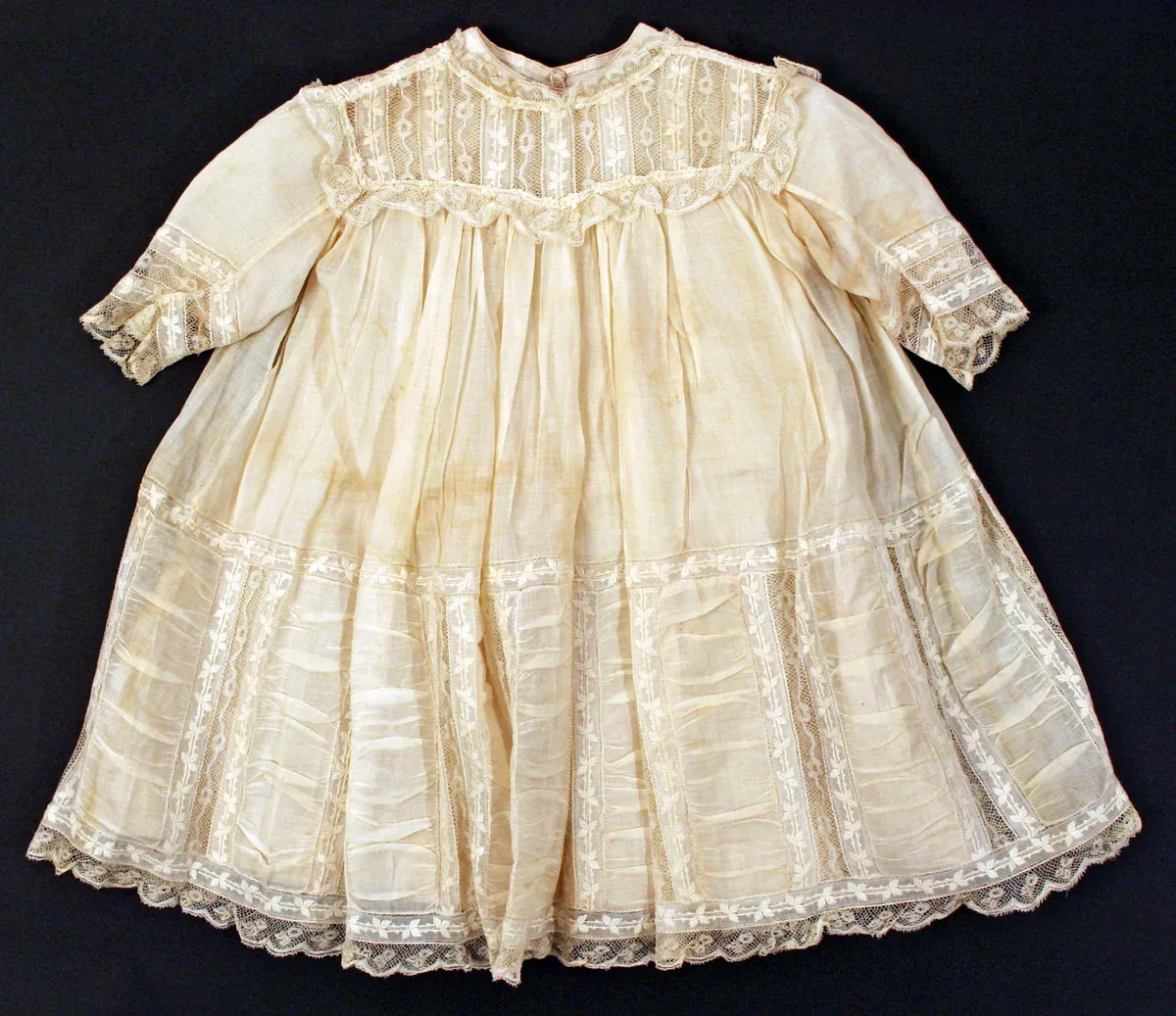
Resolve support from the gown’s construction
A narrow hanger, a shaped support and a mounted composition place different demands on the fabric. Have the proposed support assessed for this gown’s seams, layers and condition. Do not let the garment’s resemblance to a framed example settle that choice.
The Canadian Conservation Institute’s christening-gown display example describes a particular cotton gown with a square-cut bodice and straight sleeves that permit a sleeve-dowel arrangement. It also identifies mannequin or other stable supports as alternatives. That construction-specific example is not permission to insert a rod through every gown.
Miss Mustard Seed’s baby-dress project includes a decorative hanger and a fabric-covered board. Treat that as an appearance reference. The pins, glue, reused frame and nominal gap describe the author’s project, rather than an assessed mount for another family garment.
Ask the framer to explain the support, contact materials, attachments and who can release them later. If future wear matters, include it in the brief before mounting. Keep permission for cleaning, repairs or alteration separate from approval of the visual layout.
Give the bonnet and history their own space
A bonnet has shape even when its photograph looks nearly flat. Plan its support independently of the gown; do the same for booties, ribbons or other retained accessories. Avoid making the gown carry another object simply because both fit in one outline.
A photograph, ceremony card or label can identify the wearer without occupying the center of the skirt. Use a copy of an irreplaceable paper record where appropriate and have its contact and mounting requirements considered separately from the textile.
| Item | Display decision | Record to retain |
|---|---|---|
| Gown | Approved skirt view and supported outline. | Known construction, condition and mounting arrangement. |
| Bonnet | Visible shape and its separate position. | Support, front projection and how it is removed. |
| Photo | Original or identified display copy. | Subject, date and where the original is kept. |
| Label | Readable names and confirmed ceremony dates. | The source of each fact and any unresolved attribution. |
One Small Child’s post-event guide highlights later family use and labeling with a child’s name and date. Extend that record when the gown has several wearers. Avoid assigning an age or material from its appearance alone.
Plan enclosure and removal around the complete arrangement
Record the supported outline and the highest projection, including the bonnet and any retained skirt folds. Confirm the visible opening and the space above the completed mount. The usable frame-depth guide helps separate those receiving surfaces from the frame’s outside dimensions.
Agree who will open the display and where the gown and support will rest during removal. If it will return to storage between display periods, identify that location and keep the specialist’s handling instructions with the mount. A picture of the finished front does not explain how to undo it.
Choose a location away from direct sunlight, heat and damp conditions, and agree an inspection and exposure routine. CCI explains that light damage is cumulative; white fabric and UV-filtering glazing do not establish an indefinitely harmless display. A shadowbox should not be assumed airtight or to provide a controlled preservation environment.
Retain one record for the garment and its display
Use the christening gown display record for the approved view, independent accessory supports, wearer history, removal responsibility and storage location. No gown, sewing method, enclosure or return-to-wear outcome was physically tested for this article.
Comments
Share a display tip or ask a question.