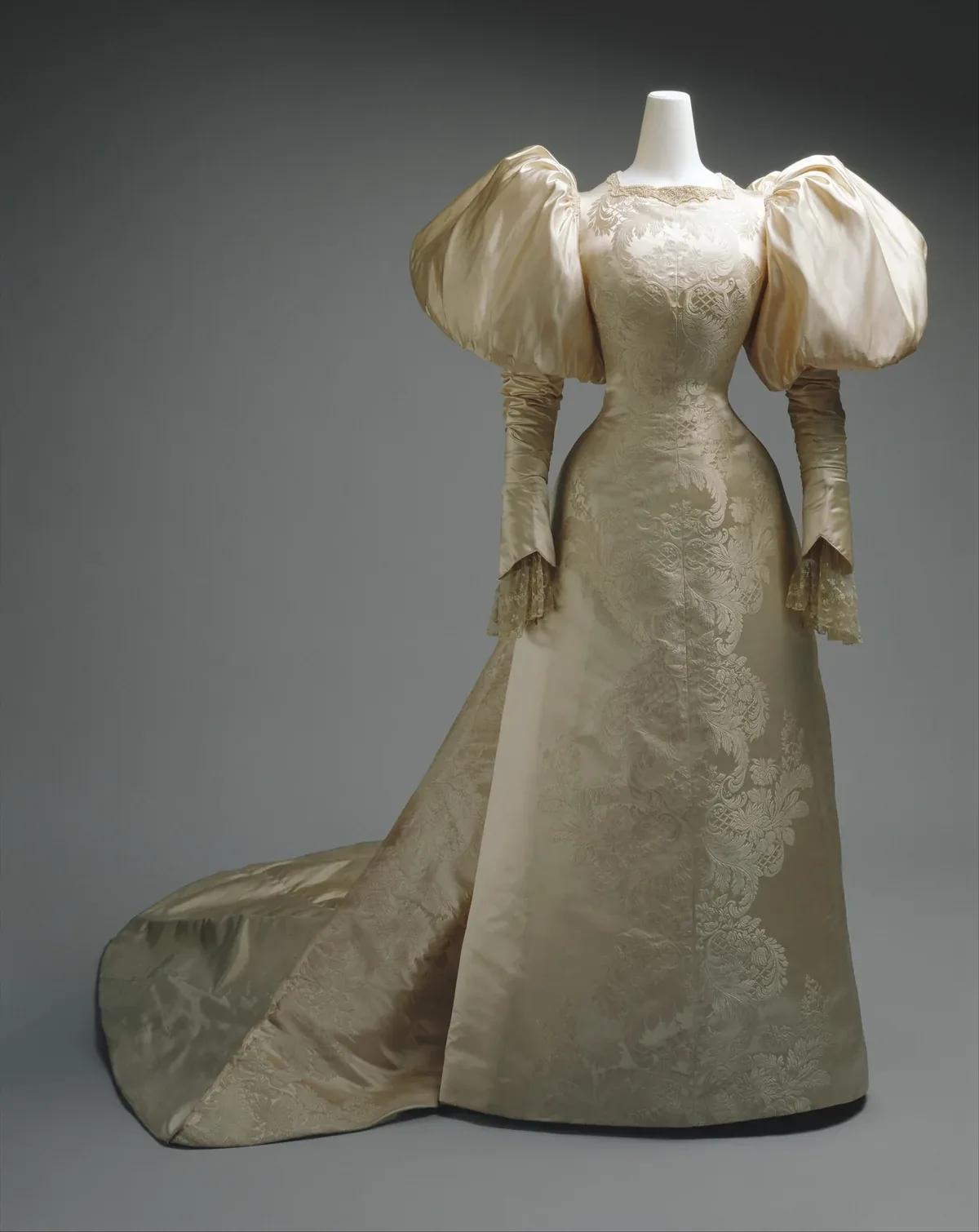
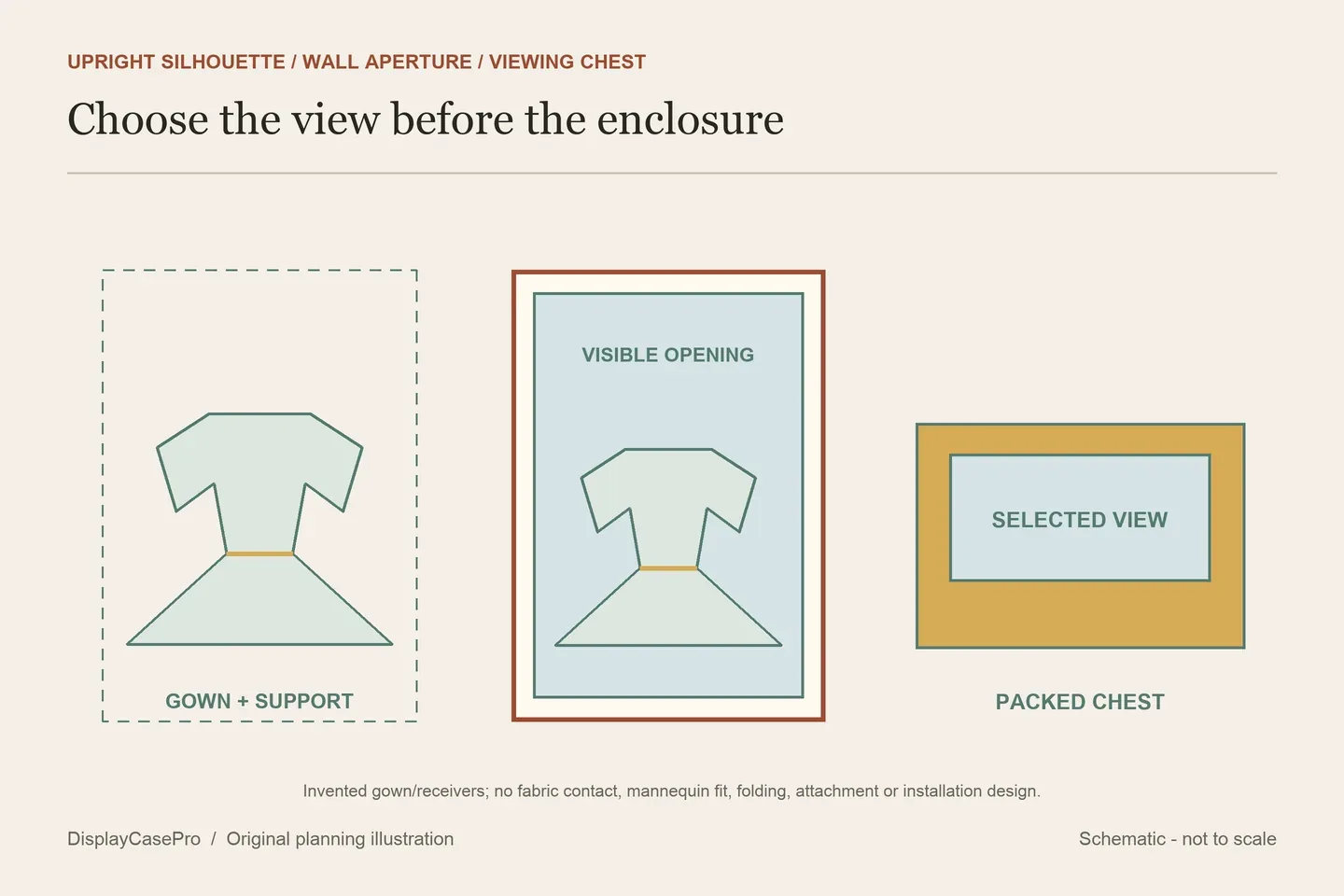
Choose a wedding dress display case by deciding how much of the gown you want to see: its supported full silhouette, a composed front in a wall frame, or a selected portion through a preservation chest’s window. The gown’s support and finished arrangement come before the case size. A cabinet’s height or a frame’s glass size cannot answer every fit question.
A full silhouette and a windowed chest show different things
Start with the details that matter to you: the bodice, sleeves, embroidery, skirt shape or train. Use existing photographs to mark those priorities before changing an already prepared or fragile gown.
| Route | Intended view | Receiving task |
|---|---|---|
| Furniture cabinet | A supported upright silhouette with room for the chosen skirt and train presentation. | Complete gown and support, clear opening and installation. |
| Wall shadowbox | An approved front-facing composition within a mat or frame. | Finished mounted depth and the actual visible aperture. |
| Windowed preservation chest | A selected view of the professionally packed gown. | Included service, internal packing arrangement and subsequent care instructions. |
Emmaline Bride’s large-case article highlights full skirts and long trains as reasons to consider a substantial enclosure. That is a useful presentation preference, without a measured fit for every dress.
Janet Davis Cleaners’ 2013 article distinguishes a furniture armoire from wall framing. Its dated examples are not current quotations or receiving drawings. Choose the format for your gown rather than a photographed celebrity arrangement.
Choose a support appropriate to this gown, then record its outline
A dress form, hanger and supported wall composition are different arrangements. Keep any existing professional mounting or preservation instructions with the gown. For a fragile, heavily embellished or historically important dress, resolve the support with a textile conservator or suitably experienced specialist before committing to the enclosure.
The Canadian Conservation Institute’s textile guidance cautions against hanging fragile or heavily decorated garments and those with weak shoulder seams. It also distinguishes the mounted textile from the glazing. An included hanger or attractive form is therefore not sufficient evidence of a suitable support for every gown.
Once the intended support is established, record the complete presentation: bodice, supported shoulders and sleeves, skirt, retained train and the support’s own base or projection. A shoulder-width measure alone leaves out the parts most likely to change a wedding gown’s enclosure.
For a long train, agree how it will be presented rather than assuming it can be forced into the remaining floor area. A framed composition and an upright silhouette can intentionally show different portions. Preserve that choice in the design approval.
A visible opening is different from the glass and the whole frame
These source descriptions were read on 18 October 2026. The following numbers describe different boundaries; none is a gown-fitting test performed by DisplayCasePro.
| Source and boundary | Published dimensions, inches | What it does not establish |
|---|---|---|
| Mrs. Case product dimensions | H80 × W37¼ × D13⅞. | No labelled clear receiving cavity for gown and form. |
| My Framing Store mat opening | 24 × 55. | Not the glass size or complete inside width and height. |
| My Framing Store glass | 28 × 60. | Not the unobstructed view through the selected mat. |
| My Framing Store overall frame | About W30.5 × H62.5 × D5, depending on final frame selection. | Five inches overall is not usable depth above a finished mount. |
My Framing Store’s shadowbox excludes the dress and hanger. Obtain its finished interior and the mounting provision for the approved composition. Do not choose a deeper-looking frame solely because the overall depth is larger than the gown’s unsupported thickness.
For Mrs. Case, request the cavity, doorway and intended dress-form arrangement together. The product’s stated overall weight is 160 lb. Keep delivery, floor placement and the manufacturer’s installation requirements in the plan; that weight does not provide an installation design.
Separate the enclosure from the form, hanger and preservation service
Mrs. Case describes a D-hook but lists the hanger, mannequin and anti-tip device as not included; its original dress form is a separate purchase. Confirm the complete selected package before planning the gown’s support or installation.
The same page calls its humidity insert a “Humidifier” in one specification line and a dehumidifier in another. Obtain the exact device and operating instructions rather than treating that wording as a verified, controlled preservation environment.
Wedding Gown Preservation Kit’s chest tour describes a professionally packed chest with tissue, a bust, a PET viewing window and an additional outer box. It mentions three chest sizes without numerical cavity specifications. This is a service presentation, rather than an empty cabinet for an upright dress form.
Ask which portion of your gown will remain visible after that service and how inspection or later opening should work. A viewing window does not promise a view of the full skirt and train. Keep the provider’s instructions with the returned package instead of replacing them with a generic unpacking or folding recipe.
Plan the support’s route and the display location together
For a cabinet, ask how the gown and support enter through the actual opening. Include the door’s movement and a suitable receiving space during access. A roomy exterior does not establish that the finished supported arrangement passes the doorway.
For a wall frame, agree who prepares and supports the composition while it is opened. A ready-to-hang product is not a complete attachment method for lace, beading or a fragile seam. Have the mount and clear separation from glazing specified for the particular dress.
Keep a veil, shoes, photograph or jewellery as separate objects in the layout. They can obscure the bodice or add their own support and depth requirements. Their inclusion should be deliberate rather than a reason to compress the gown.
CCI explains that light damage accumulates with exposure. A UV-rated panel or integrated light does not, by itself, establish suitable long-term display conditions. Discuss the location and display routine with the person responsible for the gown’s care.
Use the gown, support and viewing-boundary worksheet with the usable depth guide and collection measurement guide. It keeps the visible opening, complete support, unresolved dimensions and included services in separate fields.
Common questions
Is the frame’s 5-inch depth available for the gown?
The cited line is an overall size. Obtain the usable depth above the completed support and inside the closed glazing.
Does a preservation chest display the entire dress upright?
The sampled service describes a packed chest with a viewing window. Confirm the approved visible portion and retain its packing and care instructions.
Cover image: Wedding dress, 1896, Metropolitan Museum of Art, C.I.41.14.1; gift of Miss Agnes Miles Carpenter, 1941. Image: The Met, CC0 1.0. Whole composition resized and compressed to WebP, with smaller responsive versions. The museum illustration does not demonstrate a marketed case or prescribe its support.

Comments
Share a display tip or ask a question.