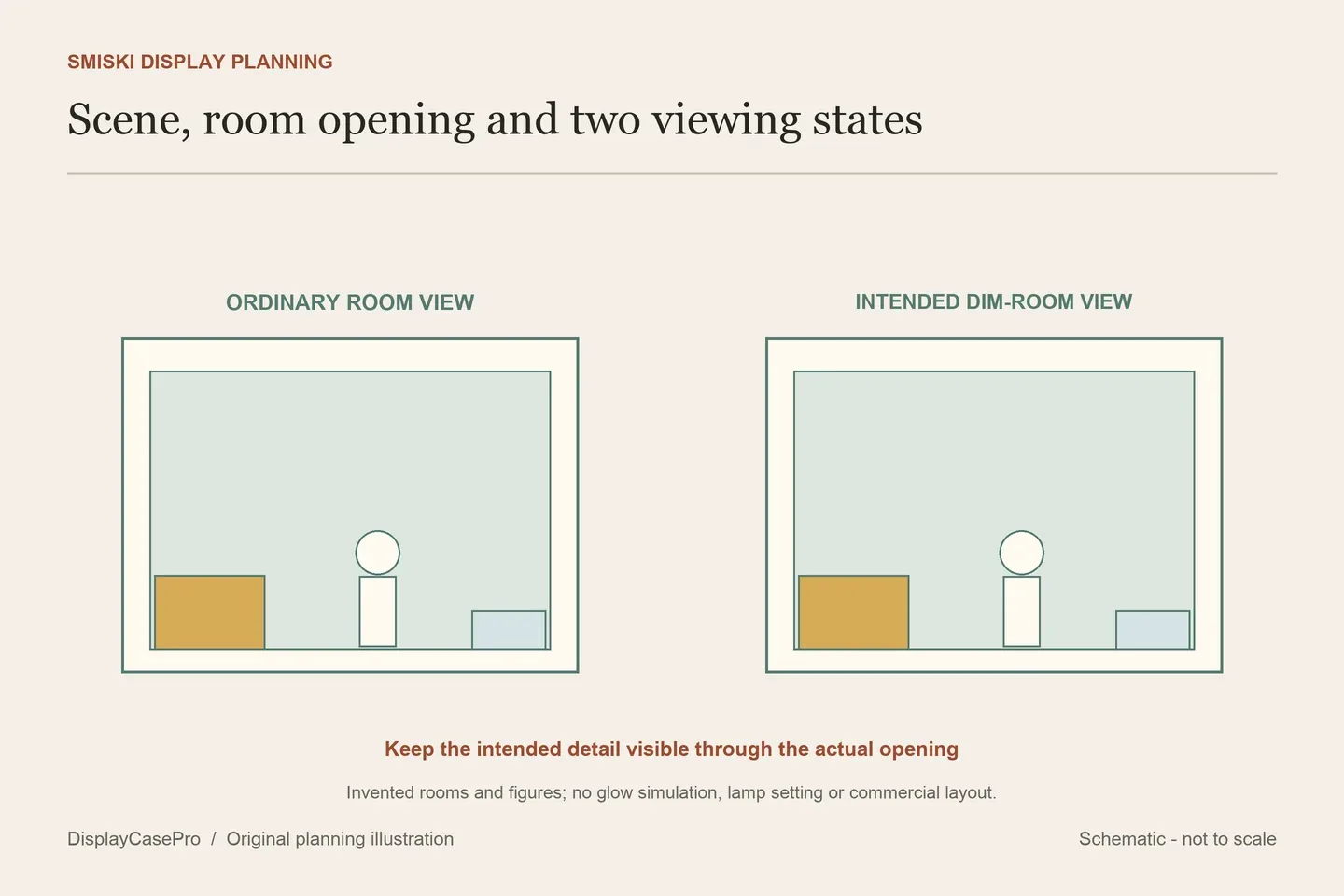
Choose a Smiski display by deciding whether you want an open miniature scene, a simple shelf or a closing enclosure. A product called a display case may actually be an open house filled with furniture. Check the room openings and usable floor space for your figures, then plan both the ordinary room view and the dim-room view that interests you.
Choose the scene before choosing its boundary
An open house can frame a figure in a doorway, on a small floor or beside miniature furniture. A plain tier can make a group easier to compare. A closing case adds an enclosing surface and an opening routine. Identify which of those elements you actually want to receive.
Write a one-sentence brief for the display. For example, you might want to see a small group looking out from separate rooms, or compare a series in a readily accessible row. These are illustrative tasks, not claims about the pose or compatibility of a particular figure.
Keep a scene's decorative furniture separate from the support requirements of the actual figure. A miniature chair shown beside a character does not establish that every pose can sit on it. Confirm the intended resting position and complete outline instead of bending or forcing a sculpted figure to fit a story.
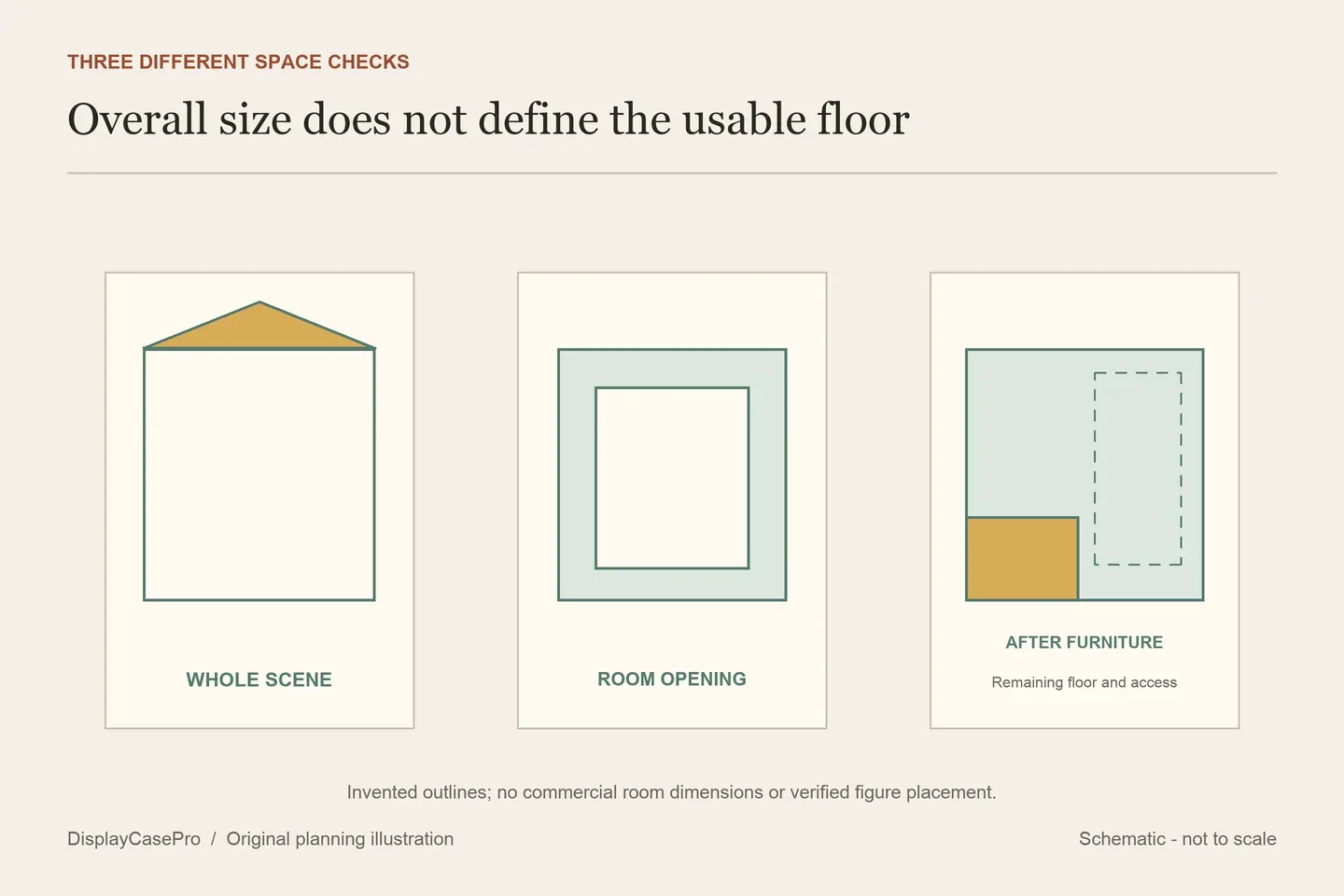
An overall house size does not describe every room
| Source | Published description | Information needed for your scene |
|---|---|---|
| Homikii Satornini case/shelf | Textured PLA scene, 25 × 25 × 25 cm. Furniture and two lights are listed. | Clear room openings, usable floors, supplied components and whether an enclosing front exists. |
| Infinite Builds three-tier giant mansion | 3D-printed PLA decorative shelf with built-in miniature furniture; figures excluded. | Numeric exterior and room sizes, access past fixed furniture and the actual lighting package. |
| MUJI collectibles category | A mixed collection of cases, frames, card files and a cylindrical lidded container. | An exact three-dimensional product, its usable cavity and closing method; no Smiski-specific fit is stated. |
Homikii's 25 cm size is an overall scene description with no inside/outside label. It does not supply a 25 cm clear cube for figures. Its listed sunbeds, bar, stools, table, chairs, glasses and lights occupy their own locations. Ask how much usable floor remains in the rooms you intend to populate.
The Infinite Builds listing gives three tiers without numeric room dimensions. A tier count cannot tell you whether a particular standing, crouched or sideways-projecting figure passes through an opening. Request a dimensioned front and side view for the actual version.
Similarly, a retailer category described as suitable for collectibles can include products intended primarily for flat paper items. Follow the exact three-dimensional case specification before assigning a figure; do not derive its cavity from a category name.
Decide what should remain visible
The official Smiski introduction presents the characters as hiding in small spaces and corners and glowing in the dark. That idea can inform the scene without requiring the entire figure to be exposed from every angle.
Choose the detail the viewer should discover: an expression in an opening, a silhouette beside furniture or the relationship between figures in adjacent rooms. Then check that detail from the normal seated or standing position. A roof, arch or stair can hide it even when the figure fits on the floor.
Give the scene a position map rather than relying on a photograph taken directly in front of it. Record the room, pose and intended viewing direction for each piece. A side room may need to be judged from an angle, while a rear position may disappear behind the front wall.
For an access check, start with the deepest planned position. Describe which figure or separate furniture component must leave first, following the scene's instructions. Do not assume decorative components are detachable, or that a small opening allows fingers to reach the figure without brushing adjacent pieces.
Assess the ordinary and dim-room views separately
In ordinary light, check expressions, silhouettes, room labels and the texture or color of the scene. In your intended dim-room setting, check what remains visible through the actual openings and any enclosing panel. Keep the room layout and viewing position recorded so the comparison concerns the same scene.
The official introduction describes glow but gives no charging duration, lamp distance, temperature or quantified brightness. It does not establish a UV requirement. Do not turn that short character description into a universal charging recipe or a promise that all positions will look equally bright.
Lights supplied with miniature furniture are also a separate specification from the figures' glow. Confirm their power source, controls, instructions and included parts for the exact package. A room can contain lamps without the listing establishing how those lamps affect a particular figure.
The twelve-format Smiski inspiration guide spans houses, acrylic tiers, wall shelves and book nooks. Treat those as layout directions to investigate. Its best-product labels, suggested counts, stacking suggestions and general claim about better glow on open shelves are not verified tests adopted by this guide.
Size any separate enclosure around the furnished scene
If you want a closing cover around a house, measure the whole completed scene rather than adding up only its residents. Include its roofline, projecting stairs, outside furniture and any permitted lighting connections. The house's own base and external projections remain part of the receiving outline.
Compare that outline with the enclosure's documented usable interior. Then establish how the cover opens and whether the furnished scene must come out before a figure can be retrieved. A fit in the closed position does not provide the space needed to rearrange a room.
Keep any power lead and control access within the actual scene and enclosure instructions. Do not make an improvised opening or assume an enclosed lighting arrangement is approved because the same lamp appears in an open product photograph.
The collection measurement guide covers the complete outline; the lighting layout guide covers the separate room-view problem. Keep the scene, individual room and two viewing states together in the Smiski scene and opening worksheet.
Common questions
Is every Smiski house a dust-enclosing case?
No enclosing front is established by a house or shelf name alone. Check the actual supplied construction and closing method.
Does a three-tier house have a fixed figure capacity?
The cited mansion description supplies no numeric room dimensions or verified count. Furniture, pose outlines, views and retrieval all affect your arrangement.
Do I need a special lamp to make the figures glow?
The official introduction does not specify one or supply operating settings. Follow the actual figure and lighting instructions rather than inferring a requirement from an inspiration photograph.
About this guide: Reference-led scene planning with original schematic images. No commercial room, figure fit, glow output, lighting setup or enclosed electrical arrangement was tested.
Comments
Share a display tip or ask a question.