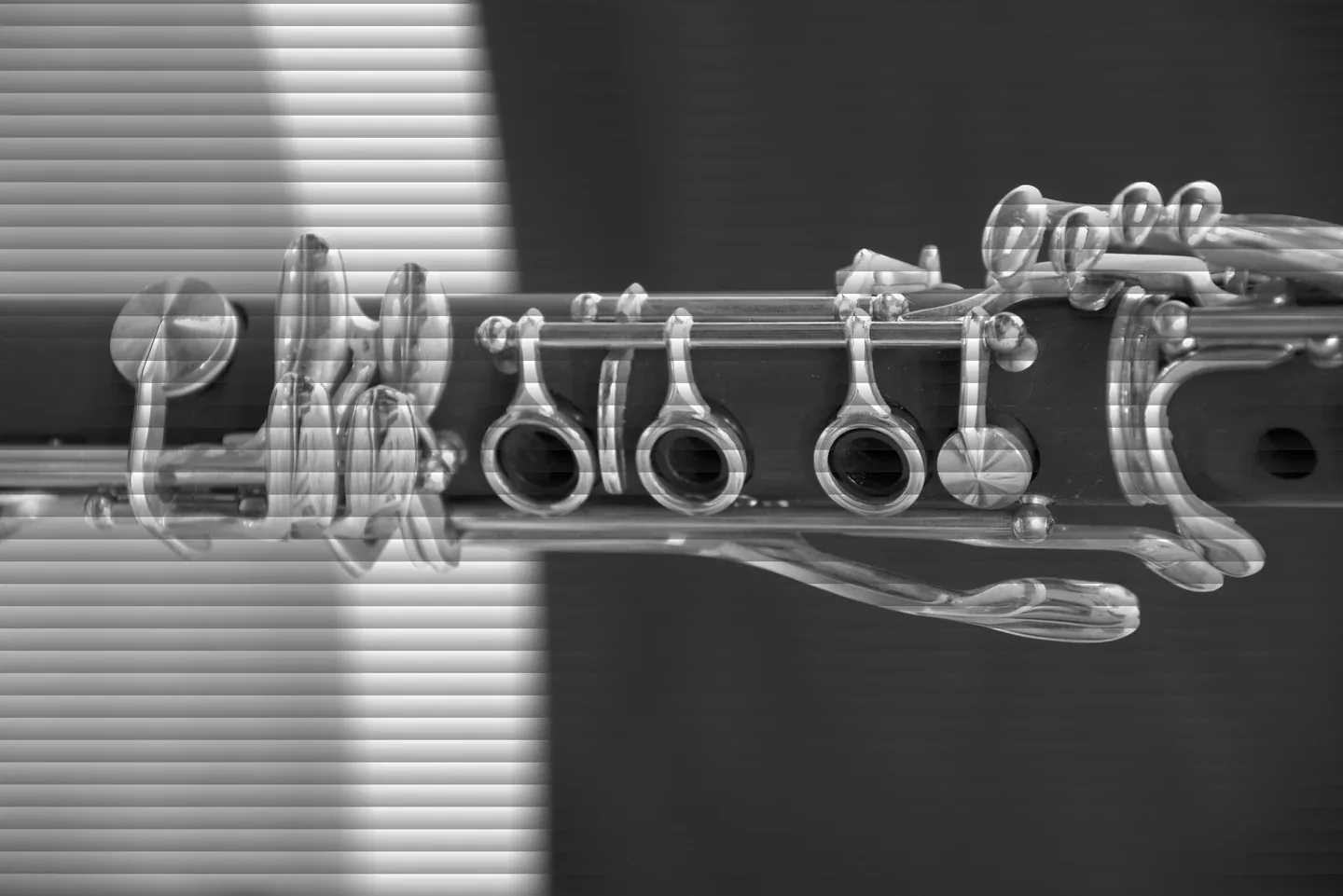
A clarinet display case can mean a visible enclosure for an assembled instrument, an open wall holder, a transport case for separate joints or a small reed box. Identify the object and its display state first. The length of one joint pocket cannot specify room for the assembled clarinet and its support.
Keep the clarinet’s type, model and retained parts together
Record the exact instrument and whether the intended presentation is assembled or divided into the joints specified by its own instructions. Include the mouthpiece, barrel, bell and any retained accessory in that state. A packed playing kit and a continuously visible instrument can have different outlines and access routines.
Keep Bb, A, bass and other types explicit. A product named clarinet case may be molded around a particular instrument, and a reed box may accept only one reed type. Avoid converting a broad category title into universal compatibility.
Choose whether the instrument will regularly leave the display for playing. That determines the intended release and return sequence, which needs to follow the instrument and holder instructions. A keepsake display still needs a later inspection route.
A reed case is not another position for an entire clarinet
| Format | What is received | Information needed |
|---|---|---|
| Open wall holder | An assembled instrument on an identified receiver. | Exact bell/contact range, mounting version and full removal path. |
| Transparent enclosure | A complete supported instrument or a specifically planned group. | Labelled cavity, support, clear opening and whole exterior. |
| Jointed transport case | The instrument in its specified separated arrangement. | Exact model, molded positions and retained accessory configuration. |
| Reed box | The named reed type and count. | Actual receiving positions, closure and intended use under its own instructions. |
Dietze Music’s clarinet-case category shows two instrument-case cards and a separate multi-instrument reed-storage card. The three-card count does not represent three full-instrument display enclosures. Follow the exact product specification after choosing the format.
Musician’s Friend’s case and gig-bag introduction discusses a Pro Pac arrangement for one A and one Bb instrument, alongside another transport bag with music storage. That is a packed-kit task. It does not supply a transparent cavity for an assembled room display.
Earspasm’s Premium Bb reed case specifies six Bb clarinet reeds and expressly excludes bass clarinet reeds. Its wood, glass, velvet and magnetic closure describe the small case’s construction. They do not establish capacity for an instrument joint, all reed profiles or a complete clarinet.
A molded joint length is not an assembled-instrument dimension
BAM’s STAGE3027I page describes a Bb case molded and best fitted around the Buffet Crampon RC. The measurements below were read on 18 October 2026 and belong to that product. DisplayCasePro has not tested its instrument fit or protection.
| Field | Published value | Meaning to retain |
|---|---|---|
| Upper joint | 22 cm / 8.7 in. | A separately named internal joint measurement. |
| Lower joint | 25.5 cm / 10 in. | Another receiving position, not total clarinet length. |
| Bell | 10 cm / 3.9 in. | Its own molded position. |
| Whole case exterior | L32 × W24 × D9 cm. | Outside transport-case dimensions. |
| Instrument scope | Made for Bb; best fitted around Buffet Crampon RC. | A later generic sentence says double clarinet; request clarification rather than assuming two-instrument capacity. |
Keep those internal joint measurements separate. Adding them together would not establish the assembled instrument’s length, coupling arrangement or supported outline. Likewise, the case’s exterior length does not describe a clear vertical display cavity.
The product’s single-model details and later double-case wording need resolution for the intended order. Ask for the exact insert and instrument count. A different retailer’s double-kit example cannot correct this particular listing automatically.
When comparing a transparent enclosure, submit the whole instrument in its chosen supported state instead. Include its holder and the required release route. A foam-lined transport insert does not provide the same receiving arrangement as a vertical wall support.
A bell keeper and the wall plate have separate jobs
String Swing’s BHH13-FW wall holder describes padded steel construction and a height-adjustable keeper ring, with flat-wall and slatwall mounting options. This is an open holder. Its description does not supply an enclosing cabinet or a numerical clear receiving space.
Ask how the actual bell and complete instrument are intended to meet the receiver. Keep the maker’s broad bell-compatibility statement as a claim to confirm for the instrument. Generic guitar headstock-cradle, finish and loading text elsewhere on the site is not a model-specific clarinet support specification.
Identify the selected plate and its own installation requirements. The flat-wall version lists mounting hardware, while the slatwall version lists a clip. That distinction does not establish one fixing suitable for every wall or permission to use an unrelated mount.
If a cover will surround the open holder, record its complete supported depth and height above the actual receiver. Ask how the instrument leaves the keeper and passes through the enclosure’s opening. A clear door does not create a release path where the holder or neighboring object blocks it.
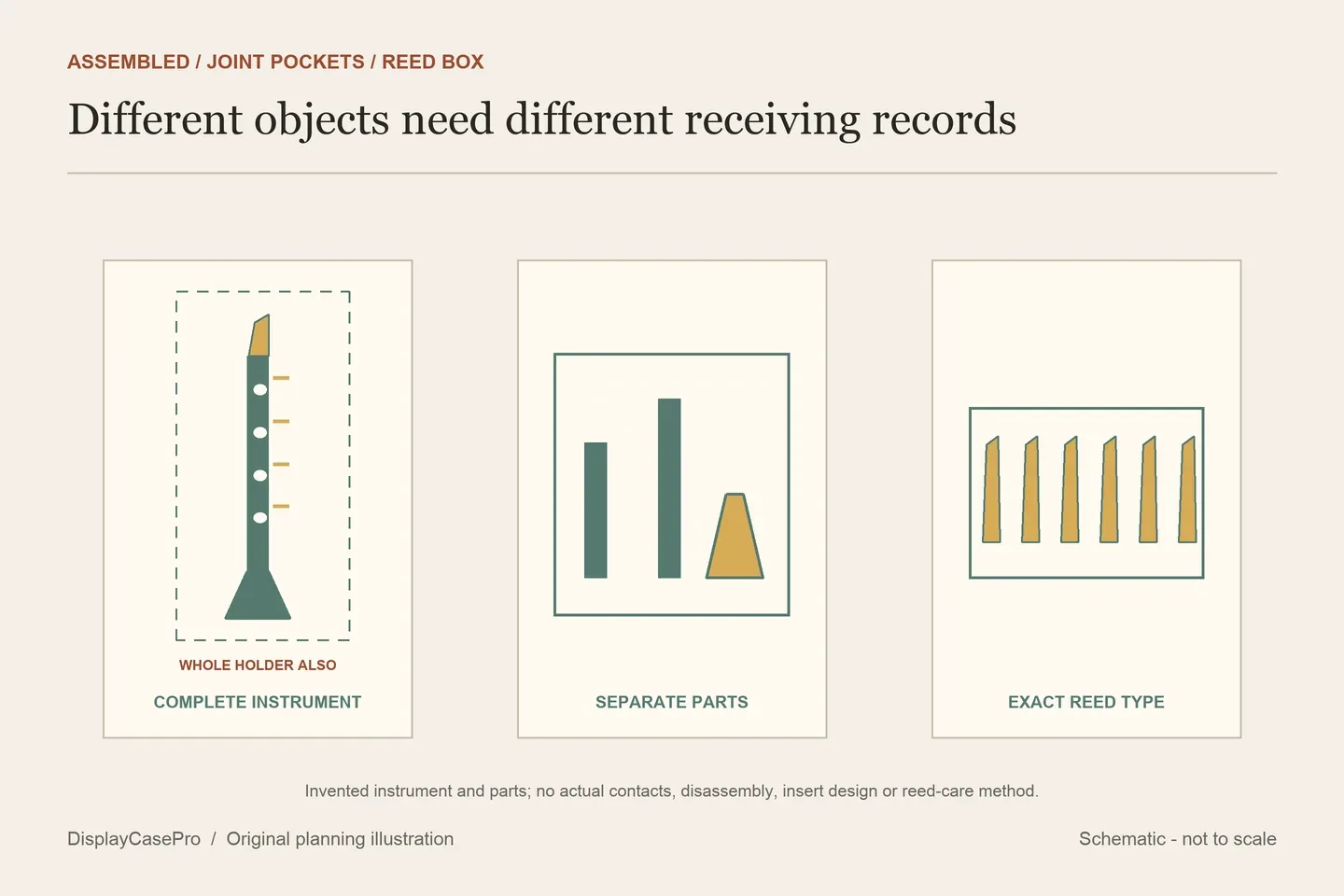
Keep each separated part linked to the correct instrument
For an assembled display, establish the intended release sequence and how the instrument remains supported during removal. Avoid treating keywork or a convenient projection as an improvised grip or support. Use the instrument and selected holder instructions for the actual operation.
For separated presentation, keep each joint, mouthpiece and associated record connected to the same instrument identifier. A similar-looking part or adjacent reed box is not evidence of an original matched group. Follow the relevant instrument and reed guidance before returning a playing kit to its positions.
Cover photograph: clarinet keywork detail by Horst J. Meuter, 19 December 2018, CC BY-SA 4.0. Whole composition retained, proportionally resized and compressed to WebP; derivatives retain that license. It does not show the entire instrument, an approved support or one of the compared products.

Use the clarinet state, joint case and reed worksheet with the collection measurement guide and collection wall planner to keep object identity, receiving space and surrounding placement distinct.
Common questions
Can I use a transport-case measurement for an assembled display?
Record the entire instrument and holder separately. Joint pockets and case exteriors have different endpoints from a complete supported display.
Does the six-reed box accept bass clarinet reeds?
The cited Earspasm Bb product expressly excludes them. Keep reed type and selected product together.
Comments
Share a display tip or ask a question.