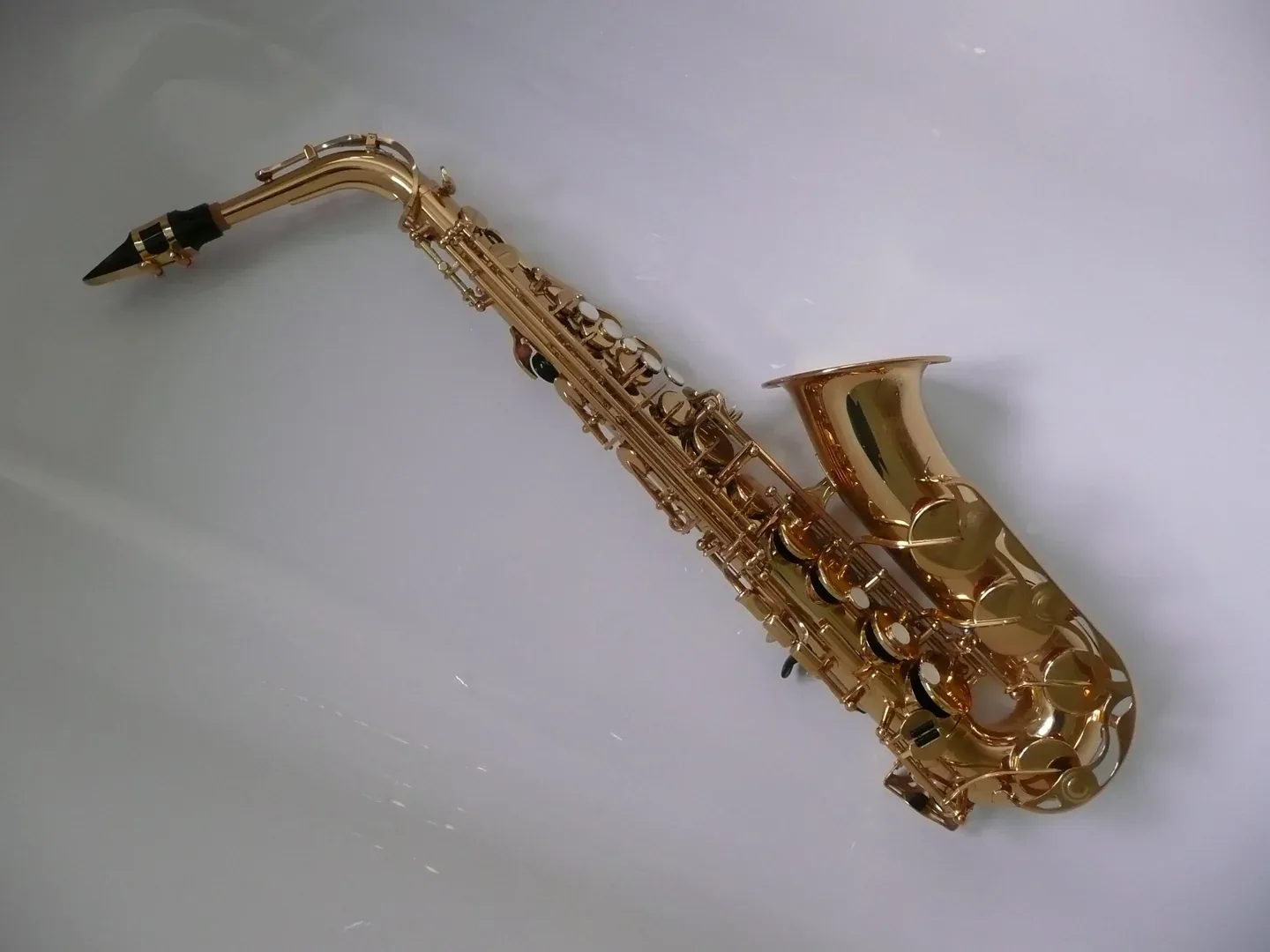
A saxophone display case can mean a transparent enclosure, an open instrument stand or a small showcase for mouthpieces. Start by identifying what will be displayed and whether it will be taken out to play. A tenor transport case solves another task: protecting its specified packed instrument, rather than showing it through a clear front.
A mouthpiece showcase is not a whole-saxophone cabinet
Valentin’s mouthpiece-case portfolio presents handmade examples made on request, including small wooden cases and showcases for mouthpieces. Some examples also mention necks. They do not specify a clear receiving space for a complete saxophone.
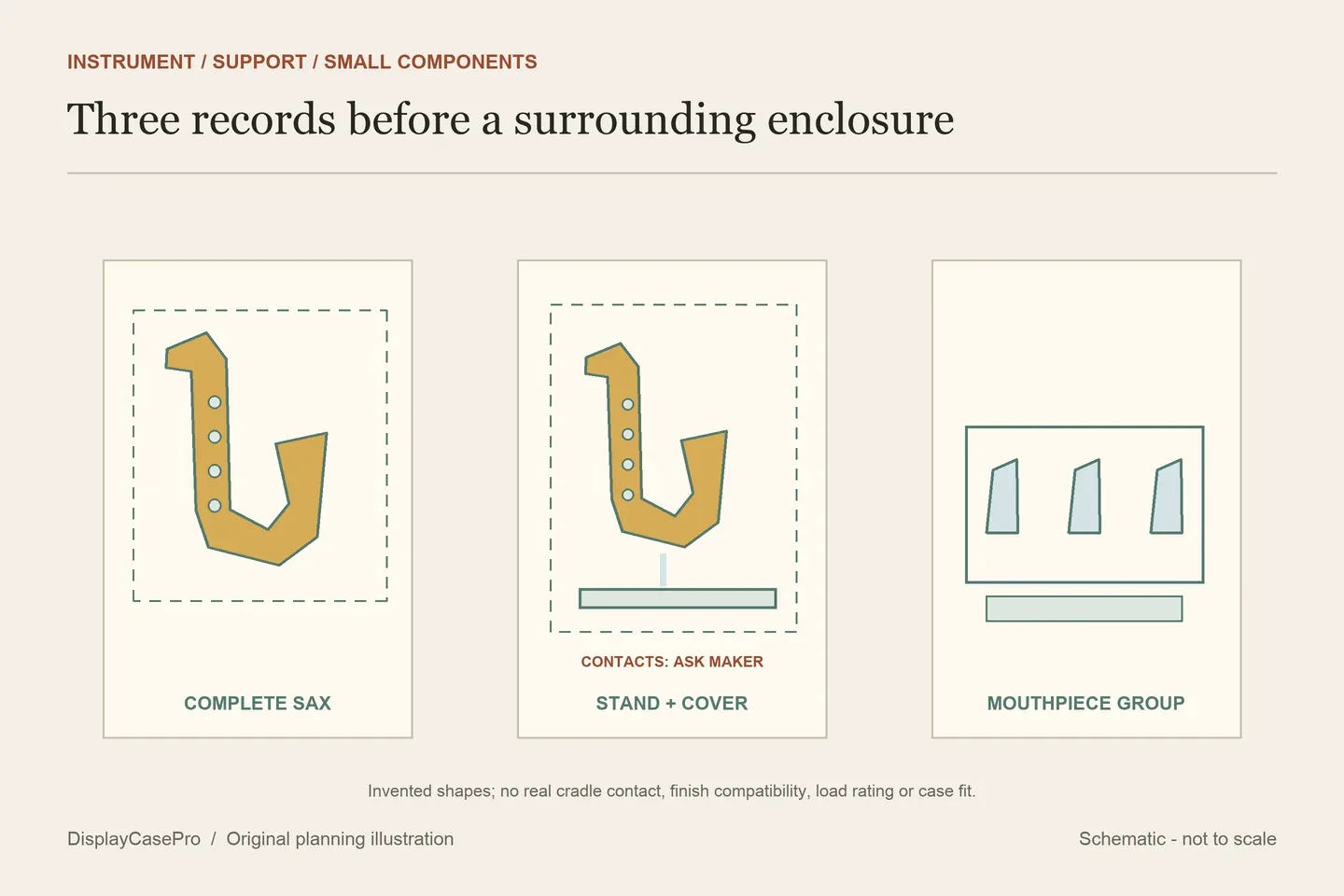
Identify the intended collection in the enquiry: one complete instrument, several instruments or a separate mouthpiece group. Keep any model, original packaging and documented collection story with the corresponding object. A visually similar mouthpiece or neck is not evidence that it belongs with a particular instrument.
For a mouthpiece collection, choose whether the important view is a maker’s marking, the whole profile or the relationship to an original box. Obtain suitable receiving positions and contact information for the actual pieces. An old portfolio example’s count or testimonial does not establish today’s capacity for your group.
For a complete saxophone, record the exact type and model. Alto and tenor scope should remain explicit. Do not treat a general saxophone title as approval for a soprano, baritone or an unusual instrument.
Choose the visible format before adding a cover
| Format | Useful question | Evidence still needed |
|---|---|---|
| Open floor or desktop stand | Do you want the instrument visible and readily approached? | Exact support, intended instrument types, contacts and complete supported outline. |
| Open wall mount | Is a wall position appropriate for this actual instrument? | Receiver compatibility, installation instructions and the path off the holder. |
| Transparent enclosing display | Must the instrument remain visible with a front closed? | Labelled cavity, supported depth, clear door aperture and opening route. |
| Opaque transport case | Do you need the specified packed instrument ready for transport? | Exact insert and instrument compatibility under that case’s own instructions. |
Chedeville’s SAXSTAND is an open solid-wood floor stand described for alto and tenor only, using a String Swing cradle. Its material and attractive furniture appearance do not supply a closing cover or a numerical receiving cavity.
Loco Para Saxo’s alto wall-mount collection includes six cards, with a separately named desktop model and a SOUL PROP card explicitly labelled for alto and tenor. Choose the exact product and obtain its own instructions. A collection heading does not establish identical receivers across all the cards.
Brevard Winds and Brass’s Sax Stands category exposes one display-stand card, without a dimensioned receiver or enclosure specification. Keep that information gap visible. A product named display stand is not thereby a transparent cabinet.
Include the bell and keywork without making them assumed supports
Record the instrument in the exact state intended for viewing: neck and mouthpiece retained, removed or separately presented according to the instrument instructions. Include any permitted retained accessory. A packed outline from a transport case may describe a different state from the assembled instrument on show.
Keep the full bell rim, body, keywork, neck and mouthpiece in the supported outline. Check front and side views. A bent bell or projecting key can extend toward a door while appearing comfortably inside a front-view rectangle.
The support should have an identified intended receiver and contacts for the exact instrument. Do not choose a key guard, lever, bell edge or convenient opening as an improvised load-bearing point. Ask the support maker about the actual model rather than reverse-engineering its contacts from a photograph.
Record known finish information and any uncertainty about refinishing or repair. Chedeville’s broad finish-safety claim is a seller statement here, without an independent compatibility test for your instrument. A soft cradle, oil finish on a wooden stand or padded insert does not establish every material contact as appropriate.
Published transport dimensions can still need correction
The sampled product descriptions were read on 18 October 2026. The comparison below retains their different scopes; it is not a set of five tested transparent cabinets.
| Source | Published information | Do not infer |
|---|---|---|
| Chedeville SAXSTAND | For alto and tenor only; open floor stand. | Compatibility with every saxophone type or an enclosing cover. |
| Valentin portfolio | Examples of custom mouthpiece cases and showcases. | A whole-instrument cavity from a small-component count. |
| Cases By Source TANK-T-SAX | Both inside and outside rows state L34 × W14 × H8 in. | A verified clear cavity or zero-thickness wall; request corrected dimensions. |
Cases By Source’s TANK tenor case describes a composite-fiberglass transport case with a tenor insert, foam and memory pads, twist latches, wheels and a nonremovable hinged lid. Those features belong to its packed transport arrangement, without providing a transparent viewing enclosure.
Its identical interior and exterior size rows need clarification before a dimensional decision. The same page also prints an unclear negative-temperature range. This guide does not use that line as an environmental specification or repair either inconsistency from another case’s figures.
If you want an enclosing display around an open stand, submit the entire instrument-and-stand assembly to the enclosure maker. Stand height, base projection and the release route are additional to the instrument’s own dimensions. Request the clear space above the finished support, rather than subtracting guessed lining or panel thickness.
A playing instrument needs an individual route off its support
Establish the intended lift or release sequence using the exact holder instructions. Check that the whole instrument clears the door and neighboring objects without using keywork as a handhold or disturbing another instrument. No universal hand gap or lifting allowance is specified here.
A mouthpiece row needs its own retrieval map and individual identification. Keep necks, caps and packaging linked to the correct record even when displayed separately. For a keepsake instrument, retain a route for later inspection; infrequent use does not remove the opening question.
The cover photograph shows a Yamaha YAS-25, with the bell, neck and keywork visible. It does not demonstrate an approved resting surface or display support. Photo: TR001, 2 May 2008, CC BY-SA 3.0. Whole composition retained, proportionally resized and compressed to WebP; derivatives retain that license.

Use the saxophone format, support and access worksheet and the collection measurement guide to keep the assembled profile distinct from the clear receiving space. Instrument care, treatment and environmental targets require guidance for the actual instrument; this format comparison does not prescribe them.
Common questions
Does an alto collection include every tenor-compatible holder?
Read the selected product’s own scope and receiver details. A category name or one dual-type card does not establish the same compatibility across the range.
Can I use a transport-case interior as a display-cabinet specification?
Confirm the displayed instrument state and support separately. A packed insert and opaque lid solve a different receiving and viewing task.
Comments
Share a display tip or ask a question.