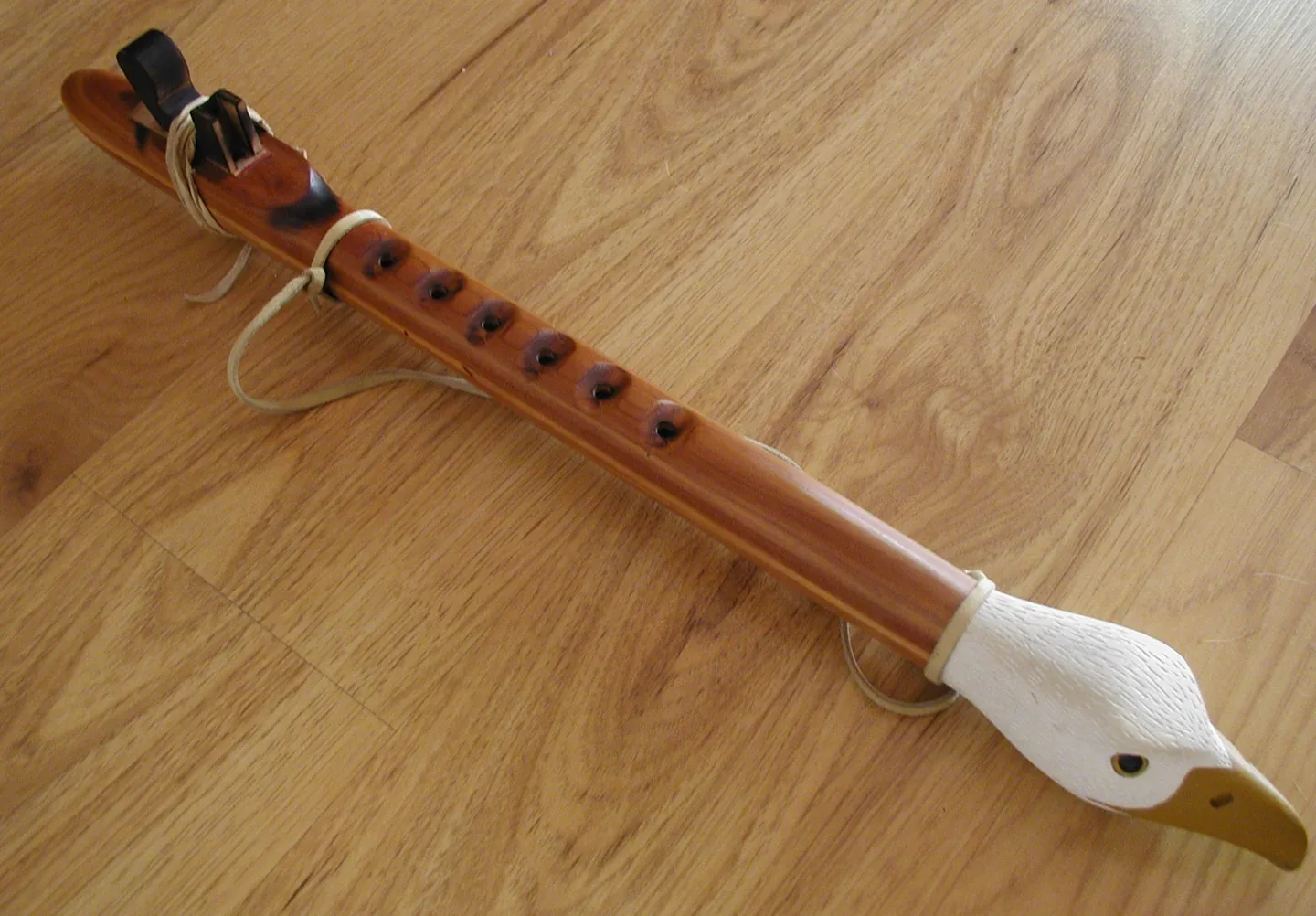
Choose a flute display case or stand for the exact kind of flute in your collection. A rack for wooden native flutes, a potter’s coordinating stand and a box for a packed Irish flute use different receivers. Record the complete instrument, including carving, cords and any keys, before treating a nominal flute count as usable capacity.
A flute name does not identify its resting interface
Record the maker, model and instrument type from the information you have. Keep uncertain attribution marked as uncertain. A wooden native-style flute, an Irish keyless flute and an instrument with projecting keywork should not inherit the same support merely because each is sold as a flute.
Choose the display state next. Will the instrument remain assembled and visible, rest in a rack between playing sessions or be packed in its own documented case arrangement? Do not use the dimensions of separated transport positions as a receiving specification for a complete instrument.
Include the full carved block, decorative head, ties, straps and other retained projections in the outline. Where a drone or another multi-body form is involved, keep its actual breadth explicit. A receiver that accepts one part of the body has not demonstrated room for the complete displayed profile.
An open rack and a closed case answer different questions
| Format | Useful purpose | Information still needed |
|---|---|---|
| Open multi-flute rack | Keep several identified instruments visible. | Exact receiver shape, instrument spacing, contacts and individual release route. |
| Individual stand | Present one instrument in its intended supported position. | Actual model compatibility and complete stand-and-instrument footprint. |
| Transparent enclosure | Show the complete supported instrument or group behind a front. | Labelled cavity, opening and space around the actual supports. |
| Packed carrying box or bag | Receive the specified instrument arrangement for storage or transport. | Exact instrument range, insert positions and instructions; a clear viewing front is a separate feature. |
High Spirits’ Six Flute Eco Wall Display: Cognac describes an open wooden rack for up to six flutes. It includes wall-mounting hardware, but does not provide a transparent enclosing front. A six-position label should start an instrument-by-instrument receiving enquiry.
Native Wood Works’ rack portfolio lists wall, antler, cluster and sway arrangements with different nominal counts, including a separately named drone option. Those names and counts do not supply one common receiver for every flute or describe a universal footprint.
Whole-rack dimensions are different from individual receiving dimensions
The product descriptions below were read on 18 October 2026. DisplayCasePro has not tested their support, finish compatibility, loading or instrument fit.
| Example | Published information | Keep separate |
|---|---|---|
| High Spirits six-flute Cognac wall rack | H25 × W12.5 × D4.5 in; up to six flutes. | Whole product dimensions, without individual receiver diameter, spacing or a load rating. |
| Lukacs Pottery display stand | Coordinating glaze options; seller says the stands fit its flutes. | An own-range statement, without a universal flute diameter or clear cavity. |
| Native Wood Works portfolio | Several nominal counts and a named six-flute drone rack. | Selected design, complete instrument breadth and the actual receiver still need confirmation. |
| McNeela cases and boxes | A range focused on Irish open-hole flutes without keys; some cases are for particular ranges. | Packed instrument compatibility, rather than an assembled transparent-display cavity. |
Keep the High Spirits rack’s overall depth with the rack itself. An instrument can project beyond its receiving parts, and its complete supported outline needs a separate record if a cover will surround it. The source’s rounded centimetre figures should not be mixed with its inch figures to manufacture a more precise receiver.
Lukacs Pottery’s stand describes glazes coordinated with its flutes. Confirm the actual instrument and how the stand receives it before applying that statement elsewhere. The displayed 1.5 lb figure is not identified as a permissible instrument load.
McNeela’s flute-box category explicitly asks buyers to check which flute type suits a particular case. Its selection includes an open Hercules stand as well as boxes, a gig bag and a low-whistle case. A category of five visible cards therefore does not mean five equivalent enclosing display cases.
Count complete visible instruments rather than vacant support positions
For a group, make a position map with one identifier for each flute. Keep the maker, documented key or tuning and associated record connected to that identifier. Similar wood colors or adjacent positions are not evidence that instruments share a maker, age or original group.
Try the intended view using existing photographs or paper outlines. A broad carving can conceal a neighboring instrument, while a hanging cord may occupy a different outline from the body. A nominally vacant rack position is not automatically a useful additional view.
Choose which details should remain visible: the whole carved head, a maker’s mark, the finger-hole side or a documented group relationship. Keep labels outside the instrument’s contacts and outline. Use the exact support maker’s instructions for the actual placement, rather than deriving contact points from a styled photograph.
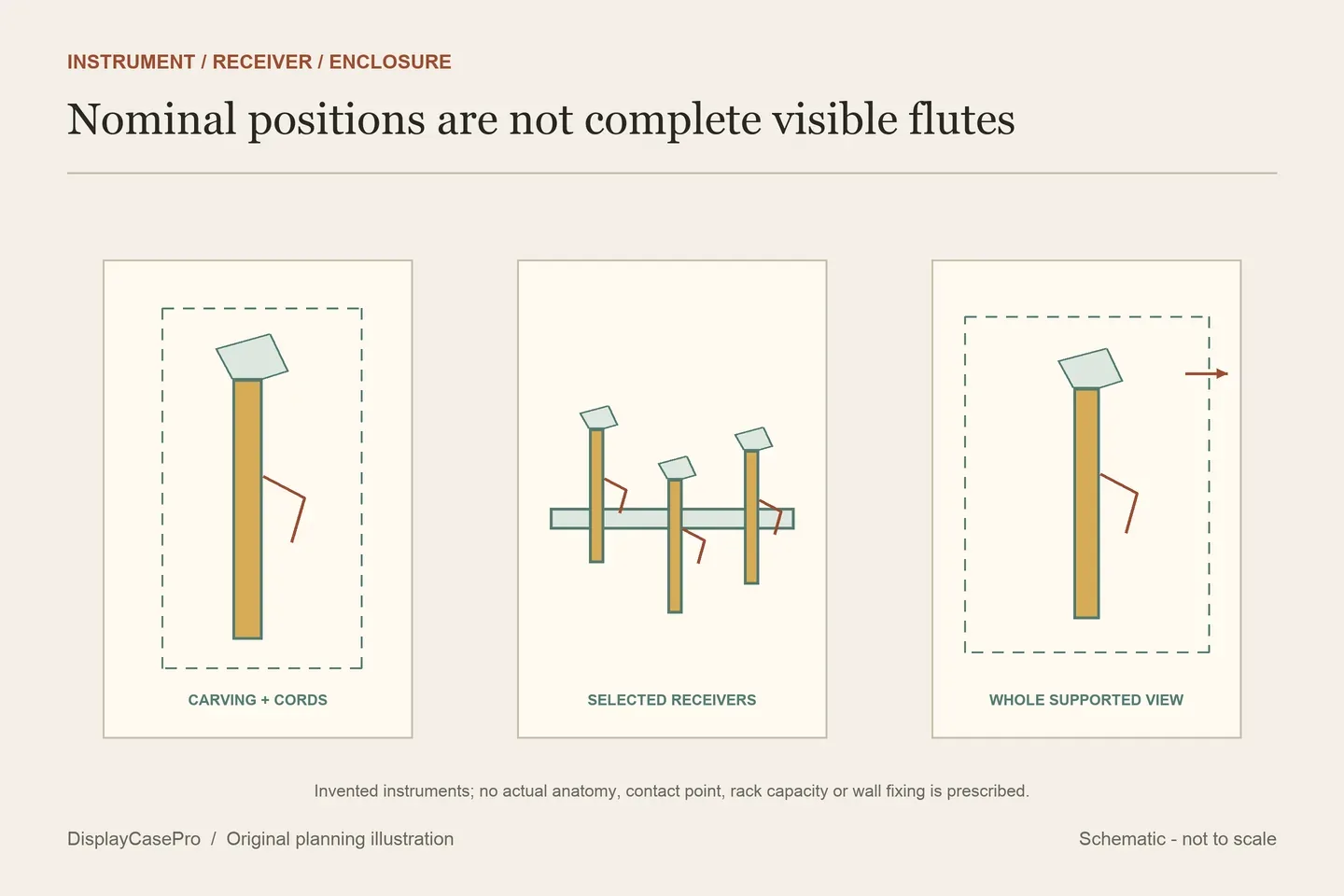
One flute should have its own route off the rack
Ask how the selected instrument leaves its receiver and which parts are intended to be supported during that operation. Include nearby carvings, ties and instruments in the route. Do not improvise a grip or supporting point from a convenient decorative projection.
If adding an enclosure, establish the door aperture and approach to every occupied position. Opening the front does not necessarily expose the instrument’s required release route. Wall hardware, instrument receivers and a surrounding cover remain different components with their own instructions.
The cover photograph shows a wooden native flute, with carving and cords visible. Photo: Jossi Fresco, 1 July 2006, CC BY 2.5. Whole composition retained, proportionally resized and compressed to WebP. The file’s maker description is not independently authenticated here; the pictured floor is not a support recommendation or a compared receiver.

Use the flute type, receiver and access worksheet and the collection measurement guide. Follow the actual instrument maker’s playing and return-to-storage guidance; this format comparison does not set an environmental or treatment routine.
Common questions
Will a six-flute rack receive six of any flute?
Confirm the exact receivers and complete instruments. Different carvings, body forms and projections can change which positions are usable.
Is an Irish flute carrying box a clear display case?
Check its construction and intended instrument state. The cited category primarily describes packed storage and transport, with stands also present.
Comments
Share a display tip or ask a question.